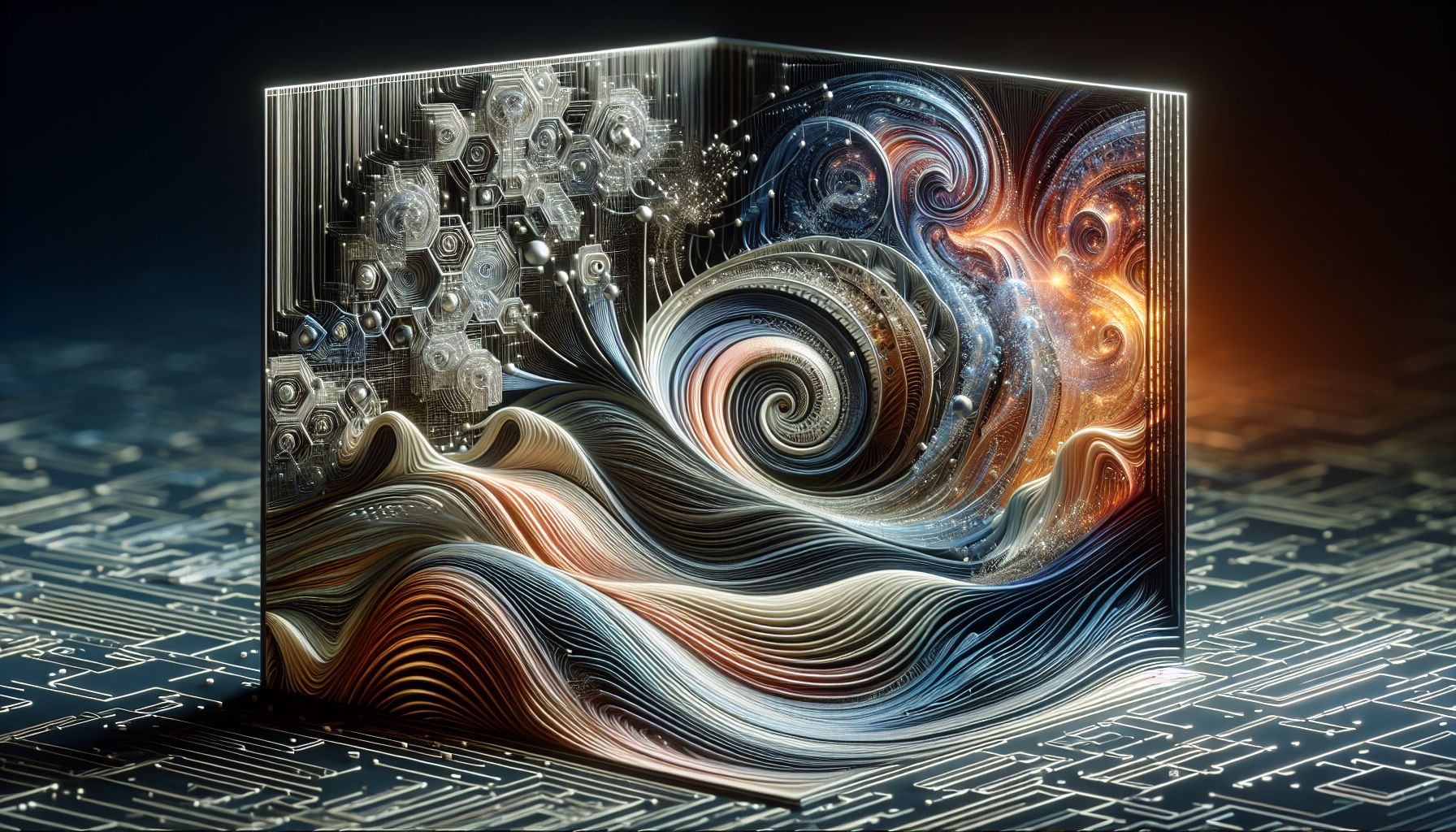
AI and the Creative Renaissance: How Algorithms Are Painting the Future
Hey tech explorers, art aficionados, and those of you who, like me, can’t draw a straight line but are fascinated by the way tech is shaping artistic landscapes! Today, we’re diving into a topic that’s stirring up a colorful, algorithm-driven storm: AI in creative arts. Yep, we’re talking about computers that spit out poetry and algorithms that paint like Picasso. So grab a cup of your preferred caffeine delivery method, and let’s unwrap this canvas of creativity, shall we?
The Dawn of Creative Machines
A few years back, if someone told me machines could pull off being artsy, I’d have chuckled and gone back to fiddling with ML models like they were my digital Lego bricks. Fast forward to today, and artificial intelligence isn’t just helping artists, it’s composing its own symphonies. From Google’s DeepDream surreal landscapes to OpenAI’s DALL-E creating images from textual prompts, AI isn’t stepping onto the scene, it’s stage-diving right into it.
A New Brush in the Artist’s Toolkit
AI’s foray into art is more like an added color on the artist’s palette. These models are tools that take traditional mediums and give them a little digital magic. Artists are using these algorithms to push boundaries, explore new styles, and rethink the creative process. Imagine being able to conjure up ideas and styles you couldn’t even fathom and then refining them with your own touch. That’s collaboration, silicon style.
Algorithms with an Artistic Flair
Alright, let’s break down some of these terminologies and technologies that are giving art an electronic edge.
GANs—The Picasso Algorithms
Generative Adversarial Networks, or GANs, have been the undisputed rockstars behind many AI art projects. Invented by Ian Goodfellow and his team back in 2014, GANs work through two neural networks playing a game of cat and mouse. One generates what it thinks is art, while the other critiques it like a persnickety art dealer. This back-and-forth polishes the AI’s skills, creating outputs that are sometimes mind-bogglingly phenomenal.
Remember when the AI-created painting “Portrait of Edmond de Belamy” sold for a hefty sum at Christie’s? That was a GAN at work! It’s like Pictionary, but your fellow player is a brainy algorithm with potentially limitless creativity.
NLP—The Poet’s Silicon Muse
And let’s not forget about AI’s entrance into the literary scene. Natural Language Processing (NLP) models like GPT-3 are crafting prose that can pass for human handiwork. Picture a digital Shakespeare that can write everything from haikus for your cat to scripts for films. Imperfect, sure, but getting better with every round.
The Good, The Bad, and The Algorithmic
As much as there’s to love about AI’s artistic flair, it’s not all sunshine and happy little trees, as Bob Ross would say. There are plenty of challenges we’re still muddling through.
The Copyright Conundrum
The legal landscape surrounding AI-generated art is a maze filled with intellectual property booby traps. Who actually owns an AI-generated piece—the developer of the algorithm, the user of the tool, or some undefined ‘AI entity’? Until we sort this out, we’re walking a fine line, balancing innovation with the need to protect creators’ rights.
The Human Element
There’s also the fear that AI could devalue the human spirit in art. Critics say automating creativity undermines the emotional connection we have with human-made works. But here’s the deal—AI isn’t a replacement; it’s an augmentation. Think of it as a keyboard for a composer or Photoshop for a graphic artist. It’s a tool that helps us explore new creative territories, not erase them.
Gazing into the Future Canvas
While I’m not swiping left on Picasso just yet, AI’s role in arts points to an exciting future. Here’s what I think is coming, with the usual disclaimer that I’m no oracle.
More Collaborations Coming
I see way more collaborations between humans and AI on the horizon. Picture this: you’re co-writing a novel with an algorithm, or perhaps working on a film where half the storyboard was dreamed up in silicon. The potential is vast and, I dare say, quite inspiring.
Education and Accessibility
As AI tools become more accessible, they’re democratizing creativity. Aspiring artists who couldn’t afford high-end tools are now able to access creative platforms that use AI, bringing diverse voices into the creative mix.
Customization and Personalization
More personalized art experiences are on the horizon. Want a painting that matches your mood? Or, perhaps, music that shifts with your heart rate? The combination of AI with wearables might just offer that personalized cultural experience we’ve only seen in science fiction.
Wrapping Up the Digital Easel
At the end of the day, whether you’re a technologist, an artist, or someone dabbling in both, the blend of AI and creativity opens up an era full of exciting possibilities and new questions. While AI won’t be donning a beret and setting up an easel in Montmartre anytime soon, it is offering tools that will help reshape creativity for generations to come.
So let’s keep pushing the boundaries, bridging the gap between circuits and sensibility. The brush is in our hands, or perhaps in AI’s invisible ones, and the canvas is boundless. Keep creating, stay curious, and as always, let’s paint that future one bit at a time.
Comments are Disabled