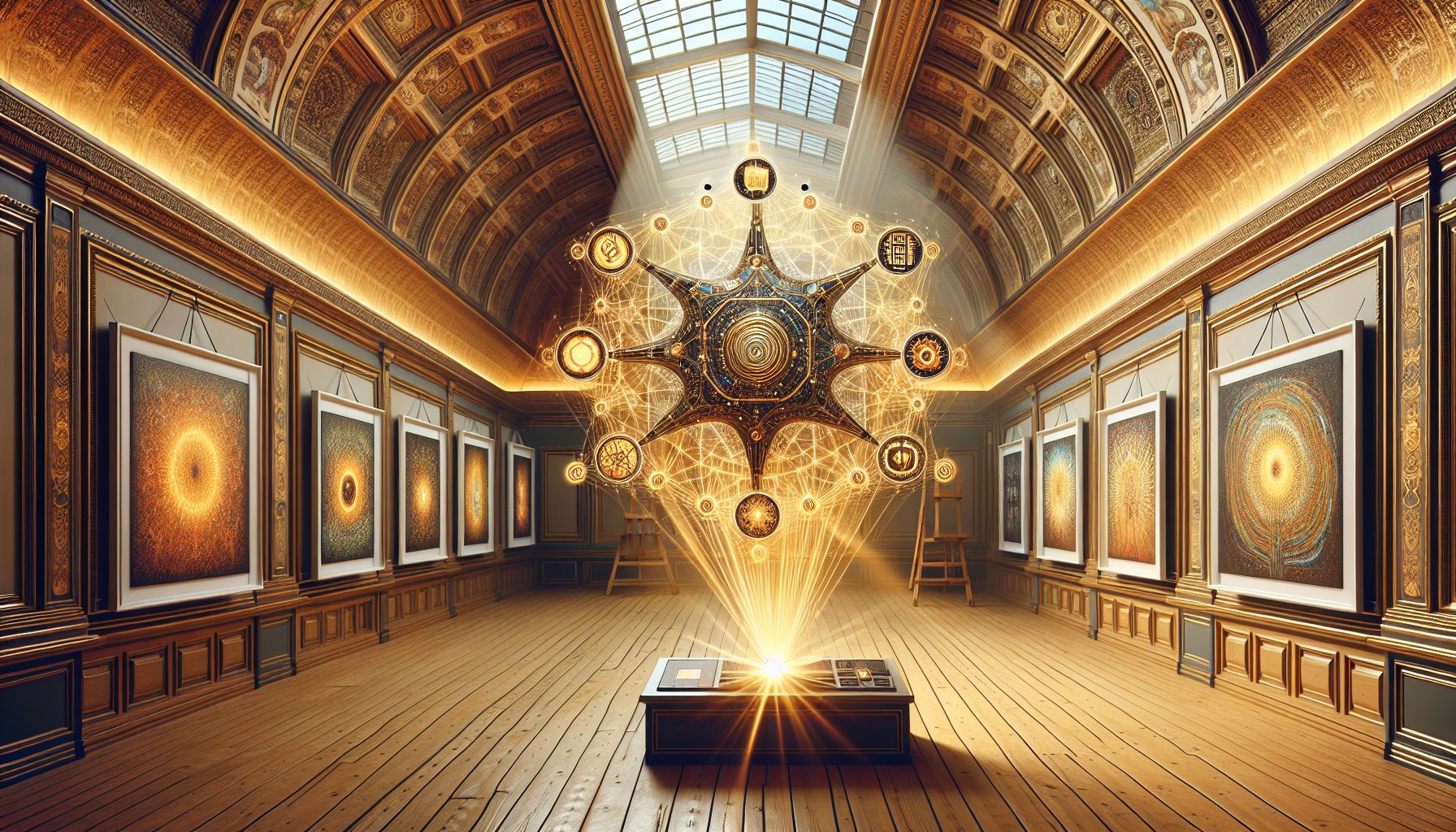
AI Artistry: The Creative Renaissance We’ve All Been Waiting For
Hey fellow tech enthusiasts! Today, I’m diving into a topic that’s really got my gears spinning: the emergence of Artificial Intelligence in the creative arts. It’s exciting, it’s futuristic, and honestly, it feels like we’re watching something historic unfold. So, grab your virtual paintbrushes and synthesizers. We’re about to explore how AI is completely flipping the creative arts on its head.
The Dawn of AI-Crafted Masterpieces
Let’s kick things off with a bit of context. Once upon a time, the arts were seen as the ultimate bastion of human creativity, an arena where only the human touch could truly shine. Well, times have changed. AI is now a full participant in the creative process, and it’s producing some seriously impressive stuff! From painting and poetry to music and beyond, AI’s artistic abilities are getting sharper by the day.
One of my favorites in this space is OpenAI’s DALL-E 2, which can generate wild images from text prompts. Just describe a scene, and boom! You’ve got a masterpiece. It’s almost like AI is playing Bob Ross, minus the afro and the happy little accidents.
Unleashing Creative Potential
I’m often asked by skeptics, “But can AI truly be creative?” Here’s the thing: Yes, it can! Creativity isn’t just about coming up with new ideas. It’s also about synthesis and innovation. And machines are incredibly good at these things. AI can analyze millions of data points, identify patterns, and create something entirely new yet familiar.
Take AI in music. David Bowie once used algorithms to shuffle lines of his song lyrics for new inspiration. Today, companies like Amper Music are using AI to compose entire soundtracks. The best part? Musicians can collaborate with these AI systems to co-create. It’s like having a super-talented, tireless bandmate with solid taste.
AI in Storytelling: The New Narrative Architects
Storytelling has seen fascinating collaboration between human and machine. Tools like OpenAI’s GPT-3 can take a writer’s outline and flesh it out into a compelling narrative with surprising twists and turns. I experimented once by feeding GPT-3 some character profiles and a basic plot. The result? A short story that was both cohesive and compelling, with characters that felt like they could walk right off the page.
Now, I’m not saying we should hand over the keys to writers’ rooms everywhere. But these tools can definitely help with breaking writer’s block. They can push narratives in directions human writers might not consider.
The Democratization of Art
Perhaps one of the most interesting aspects of AI in the creative arts is its potential to democratize art. It’s leveling the playing field, making creativity accessible to those who might not have had the tools, training, or resources to explore their artistic side. If you’ve ever tried your hand at GarageBand or Canva, you’re seeing the early stages of this movement.
Look at platforms like Artbreeder, where anyone can generate unique digital art pieces with just a few clicks. It removes the intimidation factor that often stifles creativity.
Ethical and Societal Implications
Of course, with great power comes great responsibility. The rise of AI in the arts raises some thorny ethical questions. Who owns an AI-generated piece of art? What happens when deepfakes blur the line between reality and illusion? These are genuinely tricky questions that need answers as we venture further into AI’s creative capabilities.
There’s also the valid concern about AI replacing human jobs in the creative industry. While discussions often turn apocalyptic, I believe that AI won’t replace creatives, but rather, will enhance their capabilities. Think of AI as a tool, not a replacement.
The Road Ahead
Looking forward, the future of AI in the creative arts is packed with possibilities. As AI systems continue to evolve, they will likely become even more sophisticated, creating art forms we’ve yet to imagine. Picture a future where your AI interface tailors entire art galleries based on your mood or a melody composed by AI in collaboration with an artist on the other side of the world. The possibilities genuinely feel endless.
Machine learning models will become more explainable and even better at understanding subtlety, allowing for deeper, more meaningful artistic collaborations. That’s where it gets fascinating: AI learning to adapt to and appreciate the details that define human creativity.
Conclusion
So, are we on the brink of a creative revolution driven by artificial intelligence? I think so! While challenges and questions remain, AI’s role in the creative arts signals a new era of collaboration and innovation. In a couple of years, we might look back and wonder how we ever created without our digital muses.
So, what’s your take? Are you ready to pick up an AI tool and start crafting your own masterpiece? I’d love to hear your thoughts and maybe even challenge each other to a friendly AI painting duel. Until then, keep creating and keep dreaming. The future of art is here, and it’s pretty wild!
Catch you on the next breakthrough,
[Your Name]
Comments are Disabled