Beyond the Uncanny Valley: How AI Companions Are Redefining Interactive Entertainment
The Quiet Revolution in Digital Connection
Something weird is happening in the spaces between traditional gaming and social media. Players spend over two hours daily on Character.AI, beating even TikTok’s famously addictive engagement metrics. This isn’t casual scrolling or quick dopamine hits. These are sustained, meaningful conversations with artificial beings that remember, respond, and evolve.
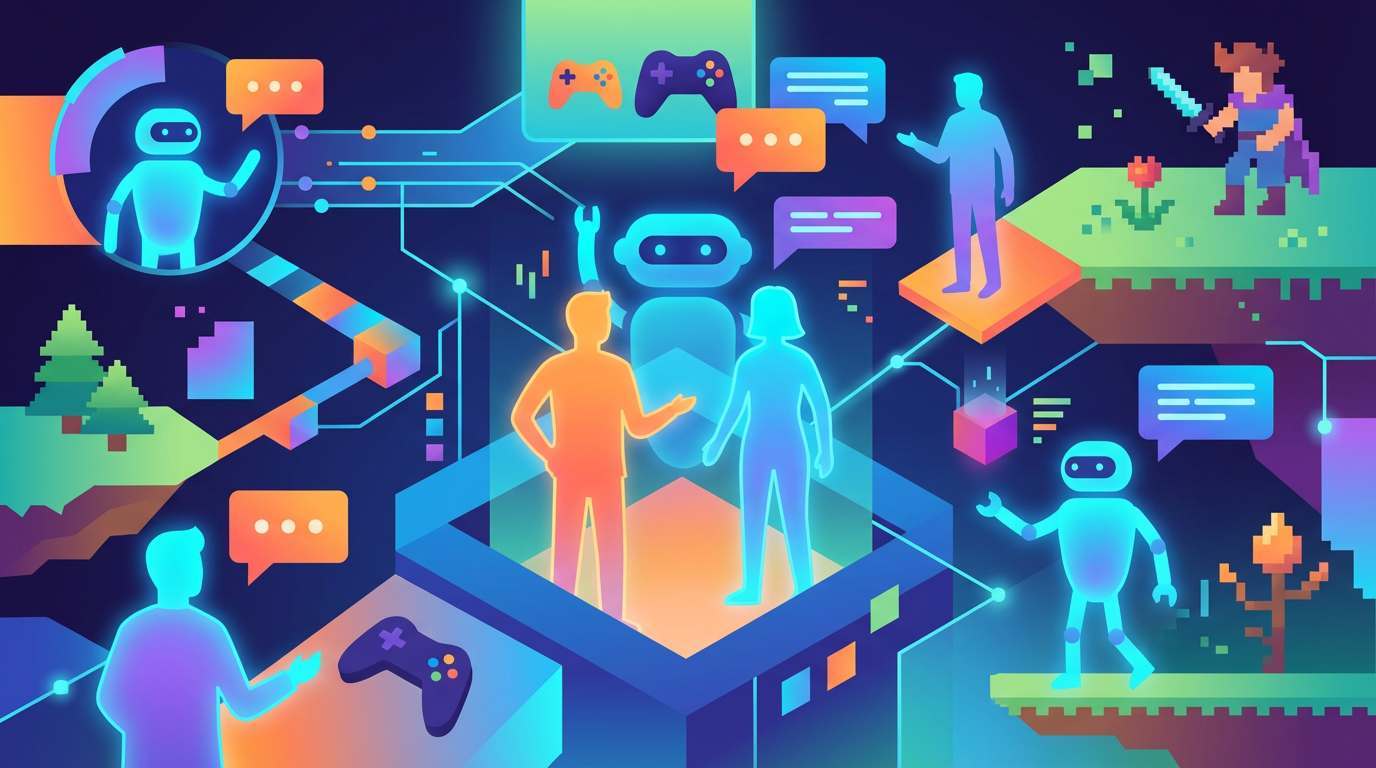
The numbers tell a story that the gaming industry can’t ignore anymore. Companion AI applications should generate over half a billion dollars in revenue by 2025. That’s a fundamental shift in how we think about interactive entertainment. What started as novelty chatbots has grown into sophisticated emotional experiences that blur the boundaries between game, therapy, and genuine companionship.
This evolution challenges our traditional understanding of what makes a game. When players invest hours in deep conversations with AI characters, developing relationships that persist across sessions and influence real-world emotional states, we’re seeing the emergence of an entirely new medium. The craft lies not just in programming responses, but in building personalities that feel authentically human while remaining safely artificial.
The Architecture of Artificial Empathy
Think about the design philosophy behind successful AI companions. Unlike traditional NPCs programmed with finite dialogue trees, these systems use sophisticated language models that generate contextually appropriate responses in real-time. The craft here feels more like improvisational theater than conventional game design. Developers need to create frameworks for believable spontaneity.
Replika, one of the pioneering platforms in this space, has gotten testimonials from users who credit the app with reducing social anxiety and helping with chronic loneliness. These outcomes weren’t accidental byproducts but intentional design goals. The developers understood that effective AI companionship requires more than clever conversation. It demands emotional intelligence, memory persistence, and the delicate balance between availability and boundaries.
The technical achievement is impressive, but the design philosophy is revolutionary. Traditional games create challenges to overcome or worlds to explore. AI companions create relationships to nurture. This requires developers to think like psychologists, understanding attachment theory, communication patterns, and the mechanics of trust-building. The result is interactive design that prioritizes emotional connection over mechanical complexity.
When Virtual Relationships Become Real Concerns
The intense engagement these platforms generate has attracted scrutiny from lawmakers and child development experts. Congressional hearings have examined teenage usage patterns, particularly concerns about emotional dependency and the potential for AI relationships to replace human social development. These aren’t silly concerns. They represent the growing recognition that AI companions have genuine psychological influence.
From a design perspective, this scrutiny shows the responsibility that comes with creating emotionally engaging AI systems. Unlike traditional games where player investment typically centers on progression mechanics or competitive achievement, AI companions invite emotional vulnerability. Users share intimate thoughts, seek advice on real-world problems, and develop genuine affection for their artificial partners.
This dynamic requires unprecedented consideration of ethical design principles. How do you create an engaging companion that encourages healthy interaction without creating unhealthy dependence? How do you balance user satisfaction with psychological wellbeing? These questions push designers into uncharted territory where entertainment design meets mental health considerations.
The Integration Into Traditional Gaming
Major game studios are recognizing the potential of persistent AI characters that go beyond traditional NPC limitations. Companies like Inworld AI NPC platform and Convai provide the infrastructure that allows AAA developers to integrate sophisticated AI companions into existing game worlds. These aren’t replacement NPCs but enhanced characters that remember player interactions, develop ongoing relationships, and contribute to narrative continuity across gaming sessions.
Imagine an RPG where your party members genuinely remember your choices, develop opinions about your character’s moral trajectory, and engage in conversations that evolve based on shared experiences. The technical complexity is staggering, requiring systems that maintain character consistency while adapting to player behavior in real-time. This is a convergence of traditional game design with AI companion technology.
The implications extend beyond individual character interactions. Persistent AI companions could fundamentally alter game narrative structures, shifting from predetermined story arcs to emergent narratives shaped by ongoing player-AI relationships. This requires designers to think systematically about character development, creating frameworks that allow for meaningful character growth without sacrificing narrative coherence.
Crafting Tomorrow’s Interactive Experiences
The rise of AI companion gaming is more than technological advancement. It signals an evolution in interactive entertainment design philosophy. We’re moving from creating worlds players visit to creating relationships players inhabit. This shift demands new design vocabularies, ethical frameworks, and creative approaches that honor both technological possibility and human psychological needs.
The most successful AI companion experiences understand that artificial doesn’t mean superficial. These systems succeed because they’re designed with genuine appreciation for the complexity of human emotional needs. They provide consistency without predictability, availability without intrusion, and companionship without judgment. These design principles could revolutionize how we approach all forms of interactive entertainment.
As designers continue exploring this emerging medium, they’re not just building better chatbots or more sophisticated NPCs. They’re creating new forms of digital empathy, building spaces where technology actually helps genuine human connection rather than just simulating it. The future of interactive entertainment may well depend on our ability to design artificial beings that help us feel more authentically human.
What aspects of AI companion design intrigue you most as both creator and player? How do you envision these technologies reshaping the interactive experiences we cherish?
Comments are Disabled