The Great Esports Comeback: How Valorant and League Reminded Us Why We Fell in Love With This in the First Place
Remember When We Thought It Was All Over?
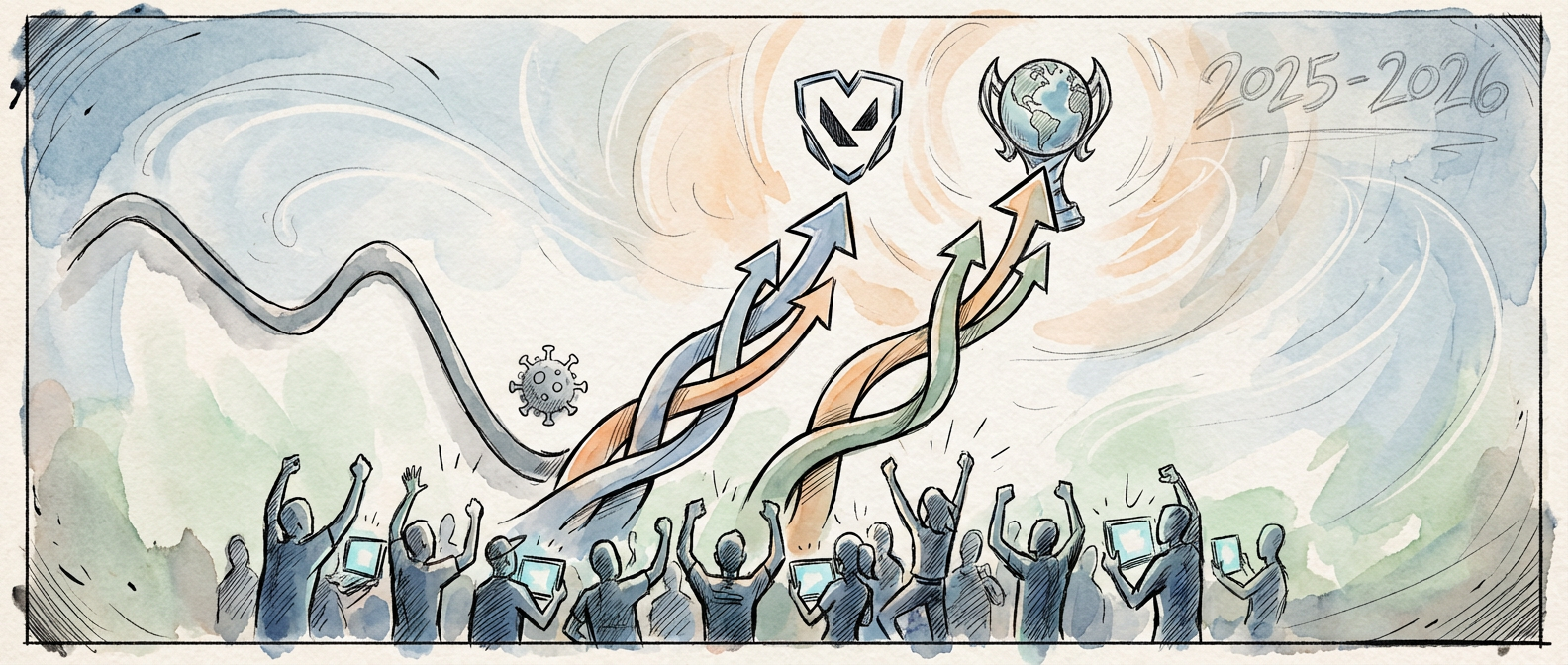
If you’ve been in the esports space since the early 2020s, you remember the feeling. That hollow ache watching viewership numbers slide year after year, wondering if the post-COVID boom had been a beautiful lie we all agreed to believe in. The energy that packed arenas and shattered concurrent viewer records felt like ancient history. Sponsors got quiet. Storylines felt forced. Even the most hype moments in chat felt like we were performing enthusiasm we didn’t quite feel anymore. But here’s the thing nobody predicted: 2025 and 2026 didn’t just stabilize esports. They reminded us what made us fall in love with it in the first place. That’s worth examining.
The decline wasn’t sudden or dramatic. It was the slow fade of a song you used to love hearing on the radio. After 2021 and 2022 hit those astronomical peaks with everyone locked inside, viewership crept downward with each passing season. By 2024, the narrative had solidified: esports was cooling off, maturing into a sustainable but smaller niche. That story felt true because it matched the mood. We weren’t wrong to feel the shift. We were just early in recognizing what came next.
The Numbers Don’t Lie, But They Do Tell Complicated Stories
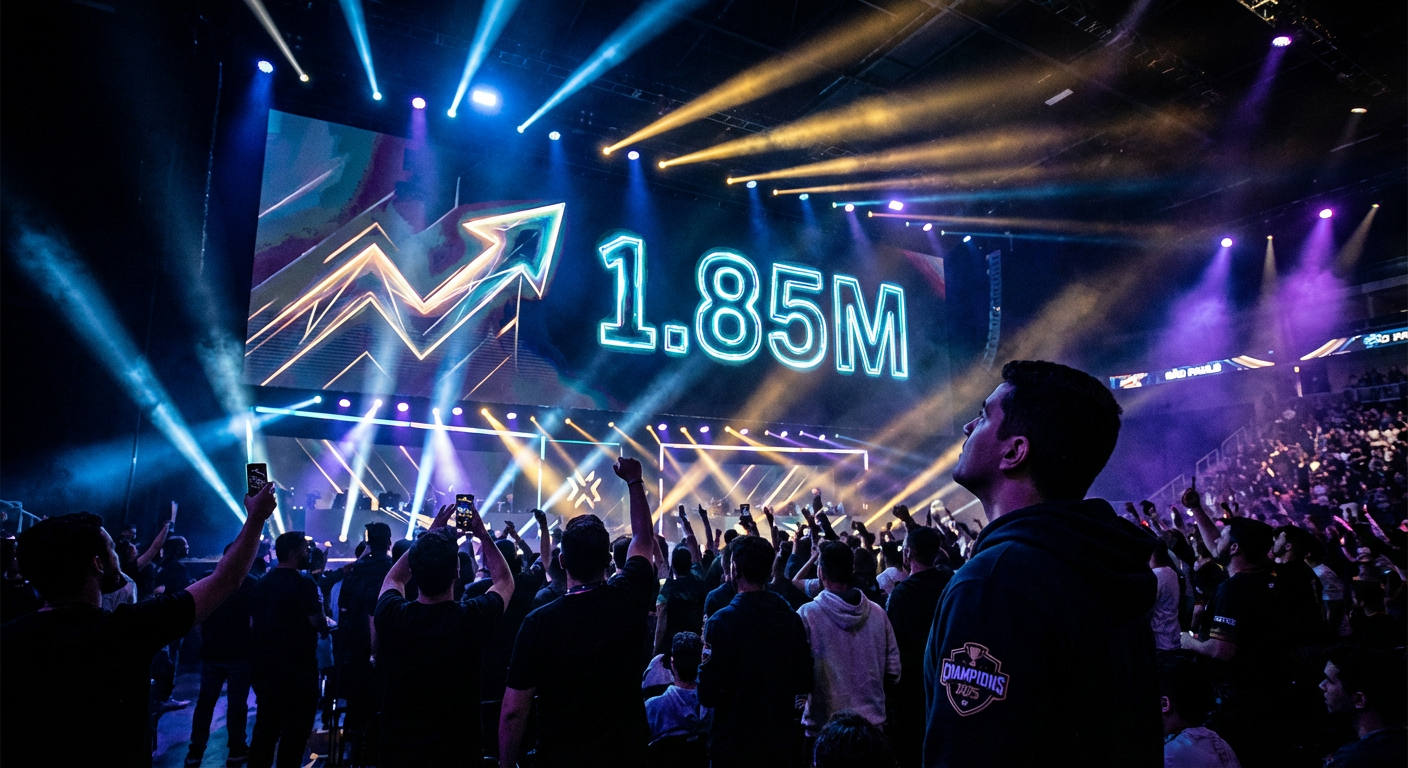
Let’s start with the concrete stuff, because the data from 2025 actually rewrites the script we’d all accepted. Valorant Champions in São Paulo pulled in 1.85 million concurrent viewers across Twitch and YouTube combined, a solid 12% bump from the previous year. That might not sound earth-shattering until you remember we were expecting decline. Instead, we got momentum. The real story, though? League of Legends Worlds in London hit 6.4 million peak concurrent viewers globally, including streams on Douyu and Huya. That number ended three consecutive years of viewership erosion. Three years. The biggest esports event on the planet stopped getting smaller and started getting bigger again.
What makes this revival feel different from the COVID spike is that it didn’t rely on desperation or novelty. People weren’t tuning in because they were bored at home. They were tuning in because the competition had gotten genuinely better. The production values had matured. The stories felt earned instead of manufactured. You can track this shift through Esports Charts Viewership Analytics, where the data shows sustained engagement rather than one-off spikes. The audience stuck around through entire tournaments instead of dipping in for highlights. That’s the difference between a bubble and a sustainable growth pattern.
Infrastructure Finally Caught Up With Ambition
Here’s what actually changed on the backend: Riot Games signed a broadcast deal with Amazon Prime Video in 2025 to co-stream Valorant Champions Tour events in ten new regional markets. This sounds like corporate speak until you realize what it means. People in regions that previously had zero legitimate way to watch professional Valorant suddenly had access. Accessibility isn’t sexy to talk about, but it’s the unsexy infrastructure that turns casual interest into a sustained fanbase. You can’t build a community if half your potential audience can’t actually watch without hunting for sketchy streams.
This kind of expansion matters because the viewership recovery in 2025-2026 wasn’t just American and European markets getting hyped again. It was global infrastructure finally maturing. When you expand distribution channels, you’re not just repackaging the same audience. You’re introducing esports to millions of people who wanted in but couldn’t find the door. That’s growth that compounds.
The Money Followed the Viewers, Just Like It Always Does
Revenue tells you the real story of whether something has staying power. The esports industry pulled in $1.1 billion in 2025, the first time since 2022 we’ve hit that threshold. That money didn’t come from thin air or artificial hype. It came from sponsorships returning because brands believed in the ROI again. It came from venue-based event ticket sales exploding. People paid money to sit in stadiums and watch esports live. That’s not speculation or narrative building. That’s people voting with their wallets.
When sponsors return, it changes everything about how tournaments operate. Prize pools grow. Production budgets increase. Teams can actually pay players salaries that compete with traditional careers. You go from hobbyist competitive scene to professional ecosystem. The viewership surge in 2025-2026 didn’t happen in a vacuum. It happened because the entire infrastructure suddenly had resources again to build something worth watching.
The Grassroots Signal: Amateur Programs Making a Comeback
Here’s the detail that genuinely excited me when I saw it: the Global Esports Federation reported 35 member national federations actively funding amateur grassroots programs as of January 2026, up from 22 in 2023. That’s not a massive jump in raw numbers, but it signals where governments and institutions are placing bets. When national federations commit tax revenue to amateur esports development, it means they’re treating this as infrastructure, not trend. You can check their full breakdown on the Global Esports Federation 2026 Industry Overview.
This grassroots expansion is the foundation the 2025-2026 viewership surge actually rests on. You don’t get champions grinding solo queue in their parents’ basement with no hope of a career path. You get those same players knowing that national federations are funding amateur circuits, that there’s a pipeline from ranked to pro. When a 17-year-old in Brazil or Korea or France can see a legitimate path to professional esports through their national federation, they practice differently. They compete differently. And when those players eventually make it to the international stage, they bring preparation and storytelling that viewers can actually engage with.
The Nostalgia Interrogation: Was It Really Better Before?
Let’s be honest about something, though. The viewership boom of 2021-2022 had elements of chaos that made it feel more spontaneous, more authentic than what we’re seeing now. There was a rawness to it. Now the production is slicker, the professionalism is visible in every frame. Is that better or just different? I genuinely don’t know. What I do know is that 2024 felt tired in a way that 2025-2026 doesn’t. The hype doesn’t feel forced anymore. When that São Paulo crowd lost it during Valorant Champions, it wasn’t nostalgia or artificial energy. It was genuine excitement about a tournament people actually wanted to watch.
The recovery we’re seeing isn’t a return to the COVID peak. It’s something new. Esports learned the lessons of unsustainability and rebuilt itself with better foundations. The viewers came back because they had reasons to stay this time, not just because they were bored. That feels more worth celebrating than any record we hit in 2021 ever did.
What’s been your experience watching esports evolve over the last few years? Did the viewership drought affect how you engaged with competitive gaming, or did you stick with your favorite teams regardless? Drop your thoughts in the comments or reach out on Twitter. I’m genuinely curious how the recovery has shifted things for longtime fans like us.
Comments are Disabled