Posts By Bruce Johnson

The Full Kingdom Hearts Timeline—Explained in Order

Kingdom Hearts video game cover art featuring iconic characters
The journey begins with a single key.

Try explaining the Kingdom Hearts timeline to a friend. If you get tangled up somewhere between Nobodies, hearts, and that whole time-travel bit, join the club. Tetsuya Nomura’s saga has been unspooling for more than twenty years across a dozen platforms, and the story is dense enough to reward anyone obsessive enough to replay it all. I’ve pored over every cutscene and secret report, and I’m laying this out not as a breezy recap but with the kind of analytical devotion the series deserves. Here’s the complete Kingdom Hearts story in chronological order—from the age of fairy tales right up to the edge of whatever comes next.

The Age of Fairy Tales: Kingdom Hearts χ

Long before Sora ever touched a Keyblade, there was a single, whole world lit by the light of Kingdom Hearts. The χ-blade—the weapon that could call the true Kingdom Hearts—was watched over by the Master of Masters and his six apprentices. Those apprentices, the Foretellers (Ira, Aced, Invi, Gula, Ava, and Luxu), each ran a Union of Keyblade wielders whose job was to gather Lux, the light-stuff that kept the world going. The Master, who could peer into the future through his Gazing Eye, saw betrayal coming a mile away. He handed each Foreteller a role and a Book of Prophecies that laid out the coming war. Ava went a step further and formed the Dandelions, a hand-picked group meant to survive the fallout and keep some light alive. Eventually, the Keyblade War shattered the χ-blade into twenty pieces—thirteen darknesses and seven lights—and splintered the world into countless smaller ones. Luxu, toting a Keyblade with the Master’s eye embedded in it, slipped away to witness whatever happened next.

The Birth of the Dark World

After the war, the original world collapsed. Its fragments became all the Disney and original worlds we know. The dark world swelled, and the first Heartless—pure, walking darkness—started cropping up. The Dandelions, led by Ephemer and Skuld, retreated into a data world the Master of Masters had built to ride out the destruction. This is where Kingdom Hearts Union χ lands players, in the aftermath, dealing with things like the Nightmare Chirithy and the scheming Brain, who kept peeling back layers of the Master’s plan. This whole era sets up the philosophical spine of the series: light and darkness aren’t just forces—they’re rival ideologies, and memory is the thread stitching every heart together.

A person holding a glowing key-shaped sword against a dark background
The Keyblade: a symbol of fractured legacies.

The Era of Darkness: Birth by Sleep

Skipping forward, we land in the era that really underpins the modern saga. Kingdom Hearts Birth by Sleep gives us three Keyblade apprentices—Terra, Ventus, and Aqua—training under Master Eraqus. Their story is the hidden tragedy behind everything Sora walks into later. Master Xehanort, an old Keyblade Master dead set on restarting the Keyblade War to forge the χ-blade again, pulls Terra toward darkness, splinters Ventus’s heart to create Vanitas (a being of pure darkness), and leaves Aqua stranded in the dark world. Ventus’s broken heart latches onto a four-year-old boy on Destiny Islands—Sora. That connection explains why Sora can even hold a Keyblade and why he’s so attuned to other people’s hearts. Terra’s body gets hijacked and becomes the vessel for Xehanort’s heart, while Aqua sacrifices herself to save her friends, wandering the dark world for over ten years.

The Origins of Organization XIII

The fallout from Birth by Sleep plants the seeds for the next chapter. Xehanort, now wearing Terra’s body, loses his memory and gets found by Ansem the Wise, ruler of Radiant Garden. Going by Apprentice Xehanort, he helps research the heart, then splits himself into a Heartless (Ansem, Seeker of Darkness) and a Nobody (Xemnas). Xemnas rounds up twelve other Nobodies—beings without hearts, born from people who lost theirs—and forms Organization XIII. Their goal? Summon Kingdom Hearts so they can get hearts of their own. That sets the table for the original Kingdom Hearts.

The Sora Chronicle: Kingdom Hearts and Chain of Memories

The timeline now tightens around Sora, a fourteen-year-old whose destiny was locked in the moment he connected with Ventus’s heart. The night Destiny Islands gets swallowed by darkness, Sora gets the Keyblade; Riku and Kairi, his oldest friends, are right there. Riku gives in to the dark, Kairi’s heart slips into Sora’s body, and Sora teams up with Donald Duck and Goofy to seal Keyholes across different worlds. The climax shows Ansem, Seeker of Darkness, possessing Riku and trying to open Kingdom Hearts using the Princesses of Heart. Sora beats him, but not cleanly: to get Kairi’s heart back, he stabs himself with the Keyblade of Heart, turns into a Heartless for a moment, and Kairi’s light pulls him back. Riku ends up wandering the darkness, looking for his own redemption.

Right after that, Chain of Memories kicks in. Sora, Donald, and Goofy walk into Castle Oblivion, a place where Organization XIII messes with memories. Sora runs into Naminé, a Nobody who can rewrite his memories, and Marluxia, who’s plotting to take over the Organization. Sora’s climb through card-based floors is a slow psychological crack-up: his memories of Kairi get swapped for Naminé, and he eventually promises to hold onto his original heart. At the same time, Riku fights his inner darkness in the basement levels, with King Mickey and the mysterious DiZ helping him. By the end, Sora goes into a year-long sleep to fix his memories, and Riku makes peace with the light-and-dark mix inside him and starts walking a path toward dawn.

A dimly lit room with a large, ornate door resembling the Door to Darkness
Every heart has a door.

The Nobody Crisis: Kingdom Hearts II and 358/2 Days

Sora wakes up in Twilight Town with his memories back and immediately faces the growing threat of Organization XIII, led by Xemnas. Kingdom Hearts II blows the lore open: Nobodies, despite lacking hearts, can grow new ones through connections. Roxas, Sora’s Nobody, lived a whole year in Twilight Town, forming friendships with Axel and Xion. 358/2 Days, a prequel interlude, traces that tragic trio. Xion turns out to be a replica built from Sora’s memories, and her absorption into Roxas is a gut punch. Roxas merges with Sora to finish his reawakening, but his pain ripples forward.

Sora’s fight against Xemnas peaks at the World That Never Was, where Xemnas tries to bend Kingdom Hearts to his will. Sora and Riku beat him, but it stings: Roxas and Naminé live on as presences inside Sora and Kairi, and Axel sacrifices himself to help Sora. The game ends with a reunion on Destiny Islands, but the loose ends—Aqua stuck in darkness, Ventus’s sleeping body in Castle Oblivion, and Terra’s fate—keep nagging.

The Unraveling Code: Coded and Dream Drop Distance

Years later, King Mickey digitizes Jiminy’s Journal to crack a strange message: “Their hurting will be mended when you return to end it.” Data-Sora replays a condensed version of the first game and learns that Naminé’s memory tinkering left a dormant ache inside Sora—the memories of people tied to him, like Terra, Aqua, and Ventus. That discovery launches the mission to rescue the lost Keyblade wielders.

Dream Drop Distance throws Sora and Riku into the Sleeping Worlds to earn the Mark of Mastery. This is where the timeline gets twisty: Young Xehanort, traveling from the past using a method where a heart ditches its body to move through time, pulls together different versions of himself from across history. The true Organization XIII, made up of Xehanort’s thirteen vessels, steps into the light. Sora nearly drowns in darkness, but Riku’s strength pulls him back, and Riku becomes a Keyblade Master. The board is set: seven lights against thirteen darknesses.

The Keyblade War Reborn: Kingdom Hearts III

Kingdom Hearts III is the collision point for every timeline thread. Sora, Donald, and Goofy set out to reclaim the power of waking and bring back Aqua, Ventus, and Terra. Aqua gets pulled from the dark world, Ventus wakes up, and Terra’s heart, still flickering inside the Guardian, breaks free of Xehanort. The seven guardians of light assemble: Sora, Riku, Kairi, Aqua, Ventus, Terra, and Lea (Axel). At the Keyblade Graveyard, the war ignites. Time resets, allies fall, and Sora uses the power of waking to bring them back—but each use drains him further. The clash ends with Xehanort summoning Kingdom Hearts with the reforged χ-blade, only to be undone by Sora’s light and the collective will of every heart. Xehanort moves on, and the world is saved.

The Price of Connection: Re:Mind and Melody of Memory

The win doesn’t last. Re:Mind shows that Sora’s reckless use of the waking power erases him from existence. Kairi, dead set on finding him, takes the lead in Melody of Memory, a rhythm-action story that sifts through her memories. The Fairy Godmother sends Riku and Kairi to the Final World, where they learn Sora is in a place called Quadratum—a kind of fictional afterlife or alternate reality. Kairi’s place as a guardian of light locks in, and Riku heads off to find his friend, closing the Dark Seeker Saga and cracking open a new, uncharted chapter.

Frequently Asked Questions

What is the chronological order of the Kingdom Hearts games?

The story order is: Kingdom Hearts χ (Union χ and Dark Road), Birth by Sleep, Kingdom Hearts, Chain of Memories (Sora and Riku’s story overlaps with 358/2 Days a little, but Days lands harder if you play it after II), Kingdom Hearts II, Coded, Dream Drop Distance, Kingdom Hearts III (with Re:Mind). Melody of Memory is an epilogue.

Why does Sora have two Keyblades?

Sora’s main Keyblade is the Kingdom Key, which he gets through his connection to Ventus’s heart. His dual-wielding in Kingdom Hearts II comes from Roxas, who could use two because he held both Sora’s and Ventus’s hearts. Once Roxas merges with Sora, that ability carries over for a while.

Is Xehanort truly defeated at the end of Kingdom Hearts III?

Master Xehanort is beaten and dies at peace, reconciling with his old friend Eraqus. Darkness as a concept doesn’t vanish, though, and the Lost Masters—including Luxu and the Foretellers—return, hinted by the box and the odd figure in Quadratum. Xehanort’s arc is finished, but his hunger for knowledge and power leaves echoes.

What is Quadratum, and why is Sora there?

Quadratum is a fictional world sitting outside the reality of Kingdom Hearts—described as an “afterworld” or “unreality.” Sora landed there after overusing the power of waking to restore his friends, breaking a fundamental law of nature. It looks like a modern city resembling Tokyo, setting up a new saga that might dig into themes of fiction versus reality.

The Kingdom Hearts timeline is a mosaic of sacrifice, memory, and bonds that refuse to break. Every tiny detail from a mobile game or a secret ending carries weight, and the series rewards patience and close attention. For those of us who’ve followed every thread from the χ-blade to the Keyblade Graveyard, the story isn’t just a puzzle—it’s a testament to how much connection matters. The saga keeps going, but the foundation we’ve built together makes whatever comes next feel earned.
GTA VI’s May 2026 Launch Window: Why the Delay Actually Matters More Than You Think

The Delay That Shook Wall Street

Rockstar Games officially moved Grand Theft Auto VI from Fall 2025 to May 26, 2026. That’s not speculation or a rumor pulled from some Discord server. Take-Two Interactive confirmed it during their January 2025 earnings call, and the market reacted immediately. Stock prices dropped roughly 9 percent that single day. Not because the game looked bad or because anyone doubted Rockstar’s ability to deliver. Wall Street was simply recalculating. A $3 billion plus revenue swing doesn’t happen in a vacuum, and investors felt it.

Here’s the thing though: delays in this industry are almost never what they seem on the surface. This isn’t a panic move or a sign of a broken development cycle. Rockstar has been methodically building this game for years. What changed wasn’t the game itself. What changed was the strategy around how it launches and what comes after.

Understanding the Live-Service Blueprint They’re Building

GTA Online is still pulling between 20 and 30 million players monthly. That’s not a dying game mode. That’s a machine. Rockstar has been generating approximately $500 million annually from shark card sales and DLC content according to Take-Two’s financial disclosures. You could argue that GTA Online is why this delay exists at all. Not because it’s failing, but because it’s succeeding so aggressively that the company needs to transition it properly before GTA VI launches.

The confirmed Leonida setting, that Florida-inspired open world, is being designed with a live-service expansion model baked in from day one. This isn’t going to be GTA V’s approach where single-player got minimal attention after launch while the multiplayer expanded. Rockstar has hired over 200 additional live-operations staff since 2023 specifically to support this shift. That’s not a small number. That’s a fundamental restructuring of how a studio of Rockstar’s scale approaches post-launch content.

The delay gives them time to ensure that system is bulletproof before millions of players are simultaneously trying to access it. A botched launch for a live-service component doesn’t just frustrate players, it tanks confidence in the entire ecosystem. Rockstar knows this. The extra months aren’t about bug fixes. They’re about infrastructure.

The Expectation Management Game

Industry analysts at Wedbush Securities have projected GTA VI could sell over 20 million units in its first year. That would match or exceed what GTA V achieved when it launched in 2013. But here’s where context matters: GTA V sold those units across three console generations. GTA VI will launch on current-generation hardware that’s already widely available. The sales trajectory could actually look completely different, and potentially steeper.

With May 2026 as the target, Rockstar gets to avoid holiday season 2025. That sounds backwards until you remember that launching during the biggest retail period of the year also means launching into maximum chaos. Server strain. Day-one connection issues. Player frustration at fever pitch. May is quieter. May lets them scale gradually. May lets them breathe.

This game isn’t being delayed because it’s incomplete. It’s being strategically repositioned because Rockstar understands how live-service games actually operate now. They’ve had a decade of GTA Online data. They know what breaks. They know what works. And they’re building GTA VI not as a sequel to GTA V, but as an evolution toward whatever a Rockstar live-service game looks like in 2026 and beyond.

Who Should Actually Care About This Delay

If you’re someone who wants to experience the story, complete the campaign, and move on, this delay affects you, sure, but it’s not the most important factor. GTA games have historically delivered excellent single-player experiences, and there’s no reason to expect that to change. The extra development time likely helps that particular side of things.

If you’re the type of player who lives in multiplayer though, who purchases cosmetics and shark cards and plans to sink hundreds of hours into Leonida’s online world, then this delay is actually good news you’re interpreting as bad news. The extra six months means the live-service infrastructure will be tested, refined, and ready to handle the initial player explosion. You won’t be part of a technical stress test. You’ll be part of a properly maintained ecosystem.

For casual observers who just want to see if GTA VI is worth playing: it will be worth playing. The question isn’t whether Rockstar will deliver a quality game. They will. The question is whether the live-service model will enhance your experience or detract from it. That depends entirely on what you want from the game.

What Happens Next

Between now and May 2026, expect Rockstar to maintain GTA Online’s momentum while quietly testing GTA VI systems on a limited scale. They’ll announce features gradually. They’ll release trailers that build hype without over-promising. They’ll keep stakeholders, investors, players, and staff, informed without creating unrealistic expectations.

The May 2026 launch will tell us whether Rockstar’s approach to live-service gaming has evolved meaningfully or whether they’re just adding more of the same monetization layer to a familiar formula. Based on the infrastructure investments and hiring decisions, I’m optimistic they’re attempting something more ambitious. Whether execution matches ambition is a different question entirely.

Check Take-Two Interactive Investor Relations for official quarterly updates, and keep an eye on Rockstar Games GTA VI Official for feature announcements as we approach launch. The delay is real. The strategy behind it is deliberate. Whether it pays off depends on execution, and we’ll know soon enough. What’s your take on the live-service direction? Are you excited about how Rockstar’s approaching this, or skeptical?

The Great Esports Comeback: How Valorant and League Reminded Us Why We Fell in Love With This in the First Place

Remember When We Thought It Was All Over?

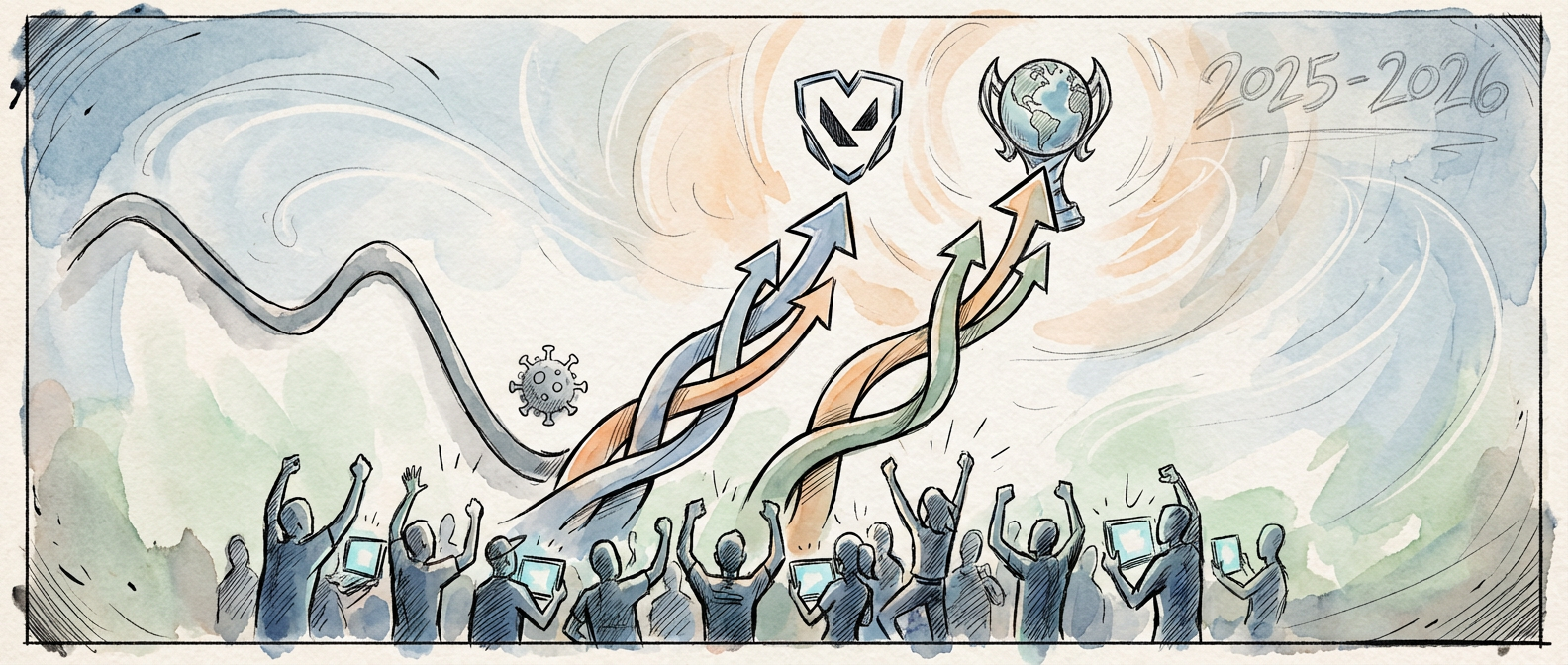
If you’ve been in the esports space since the early 2020s, you remember the feeling. That hollow ache watching viewership numbers slide year after year, wondering if the post-COVID boom had been a beautiful lie we all agreed to believe in. The energy that packed arenas and shattered concurrent viewer records felt like ancient history. Sponsors got quiet. Storylines felt forced. Even the most hype moments in chat felt like we were performing enthusiasm we didn’t quite feel anymore. But here’s the thing nobody predicted: 2025 and 2026 didn’t just stabilize esports. They reminded us what made us fall in love with it in the first place. That’s worth examining.

The Great Esports Comeback: How Valorant and League Reminded Us Why We Fell in Love With This in the First Place

The decline wasn’t sudden or dramatic. It was the slow fade of a song you used to love hearing on the radio. After 2021 and 2022 hit those astronomical peaks with everyone locked inside, viewership crept downward with each passing season. By 2024, the narrative had solidified: esports was cooling off, maturing into a sustainable but smaller niche. That story felt true because it matched the mood. We weren’t wrong to feel the shift. We were just early in recognizing what came next.

Illustration for The Great Esports Comeback: How Valorant and League Reminded Us Why We Fell in Love With This in the First Place

The Numbers Don’t Lie, But They Do Tell Complicated Stories

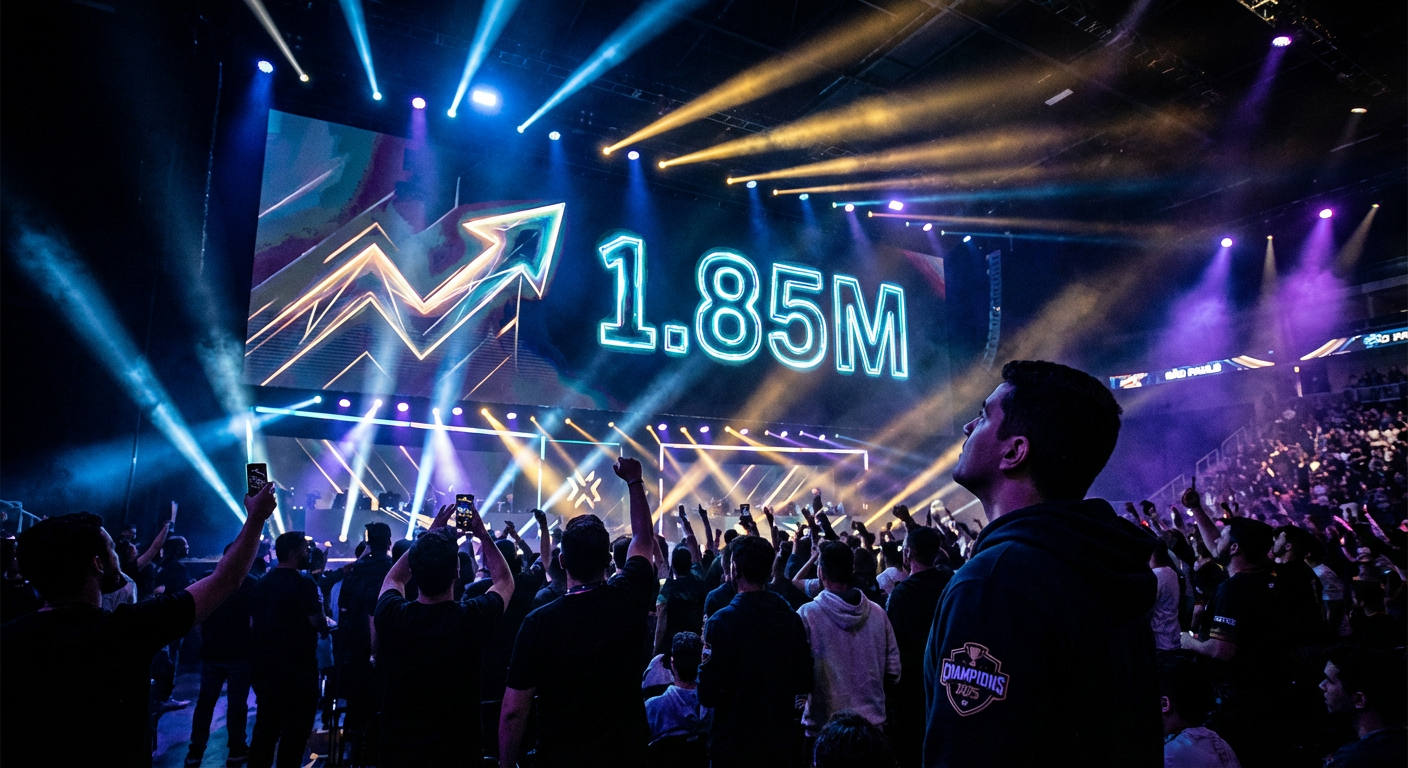
Let’s start with the concrete stuff, because the data from 2025 actually rewrites the script we’d all accepted. Valorant Champions in São Paulo pulled in 1.85 million concurrent viewers across Twitch and YouTube combined, a solid 12% bump from the previous year. That might not sound earth-shattering until you remember we were expecting decline. Instead, we got momentum. The real story, though? League of Legends Worlds in London hit 6.4 million peak concurrent viewers globally, including streams on Douyu and Huya. That number ended three consecutive years of viewership erosion. Three years. The biggest esports event on the planet stopped getting smaller and started getting bigger again.

What makes this revival feel different from the COVID spike is that it didn’t rely on desperation or novelty. People weren’t tuning in because they were bored at home. They were tuning in because the competition had gotten genuinely better. The production values had matured. The stories felt earned instead of manufactured. You can track this shift through Esports Charts Viewership Analytics, where the data shows sustained engagement rather than one-off spikes. The audience stuck around through entire tournaments instead of dipping in for highlights. That’s the difference between a bubble and a sustainable growth pattern.

Infrastructure Finally Caught Up With Ambition

Here’s what actually changed on the backend: Riot Games signed a broadcast deal with Amazon Prime Video in 2025 to co-stream Valorant Champions Tour events in ten new regional markets. This sounds like corporate speak until you realize what it means. People in regions that previously had zero legitimate way to watch professional Valorant suddenly had access. Accessibility isn’t sexy to talk about, but it’s the unsexy infrastructure that turns casual interest into a sustained fanbase. You can’t build a community if half your potential audience can’t actually watch without hunting for sketchy streams.

This kind of expansion matters because the viewership recovery in 2025-2026 wasn’t just American and European markets getting hyped again. It was global infrastructure finally maturing. When you expand distribution channels, you’re not just repackaging the same audience. You’re introducing esports to millions of people who wanted in but couldn’t find the door. That’s growth that compounds.

The Money Followed the Viewers, Just Like It Always Does

Revenue tells you the real story of whether something has staying power. The esports industry pulled in $1.1 billion in 2025, the first time since 2022 we’ve hit that threshold. That money didn’t come from thin air or artificial hype. It came from sponsorships returning because brands believed in the ROI again. It came from venue-based event ticket sales exploding. People paid money to sit in stadiums and watch esports live. That’s not speculation or narrative building. That’s people voting with their wallets.

When sponsors return, it changes everything about how tournaments operate. Prize pools grow. Production budgets increase. Teams can actually pay players salaries that compete with traditional careers. You go from hobbyist competitive scene to professional ecosystem. The viewership surge in 2025-2026 didn’t happen in a vacuum. It happened because the entire infrastructure suddenly had resources again to build something worth watching.

The Grassroots Signal: Amateur Programs Making a Comeback

Here’s the detail that genuinely excited me when I saw it: the Global Esports Federation reported 35 member national federations actively funding amateur grassroots programs as of January 2026, up from 22 in 2023. That’s not a massive jump in raw numbers, but it signals where governments and institutions are placing bets. When national federations commit tax revenue to amateur esports development, it means they’re treating this as infrastructure, not trend. You can check their full breakdown on the Global Esports Federation 2026 Industry Overview.

This grassroots expansion is the foundation the 2025-2026 viewership surge actually rests on. You don’t get champions grinding solo queue in their parents’ basement with no hope of a career path. You get those same players knowing that national federations are funding amateur circuits, that there’s a pipeline from ranked to pro. When a 17-year-old in Brazil or Korea or France can see a legitimate path to professional esports through their national federation, they practice differently. They compete differently. And when those players eventually make it to the international stage, they bring preparation and storytelling that viewers can actually engage with.

The Nostalgia Interrogation: Was It Really Better Before?

Let’s be honest about something, though. The viewership boom of 2021-2022 had elements of chaos that made it feel more spontaneous, more authentic than what we’re seeing now. There was a rawness to it. Now the production is slicker, the professionalism is visible in every frame. Is that better or just different? I genuinely don’t know. What I do know is that 2024 felt tired in a way that 2025-2026 doesn’t. The hype doesn’t feel forced anymore. When that São Paulo crowd lost it during Valorant Champions, it wasn’t nostalgia or artificial energy. It was genuine excitement about a tournament people actually wanted to watch.

The recovery we’re seeing isn’t a return to the COVID peak. It’s something new. Esports learned the lessons of unsustainability and rebuilt itself with better foundations. The viewers came back because they had reasons to stay this time, not just because they were bored. That feels more worth celebrating than any record we hit in 2021 ever did.

What’s been your experience watching esports evolve over the last few years? Did the viewership drought affect how you engaged with competitive gaming, or did you stick with your favorite teams regardless? Drop your thoughts in the comments or reach out on Twitter. I’m genuinely curious how the recovery has shifted things for longtime fans like us.

The Mobile-to-Console Pipeline Is Real: How Genshin Impact’s 2025 Lore Drops Are Training a Generation to Demand Better Storytelling from AAA Games

When a Mobile Game Outnarrates the Industry

Okay, so here’s the thing that nobody was really talking about until this year: Genshin Impact’s Natlan arc conclusion earlier in 2026 genuinely hit different. I’m not being hyperbolic when I say that a mobile gacha game did something that most AAA studios fumbled in 2025. According to an IGN community poll conducted in December 2025, players aged 18-24 rated the emotional resonance of Genshin’s story beats higher than several major console releases. That’s not just players being nostalgic about their favorite game. That’s a genuine shift in what audiences expect from narrative pacing, character development, and world-building.

The Mobile-to-Console Pipeline Is Real: How Genshin Impact's 2025 Lore Drops Are Training a Generation to Demand Better Storytelling from AAA Games
The Mobile-to-Console Pipeline Is Real: How Genshin Impact’s 2025 Lore Drops Are Training a Generation to Demand Better Storytelling from AAA Games

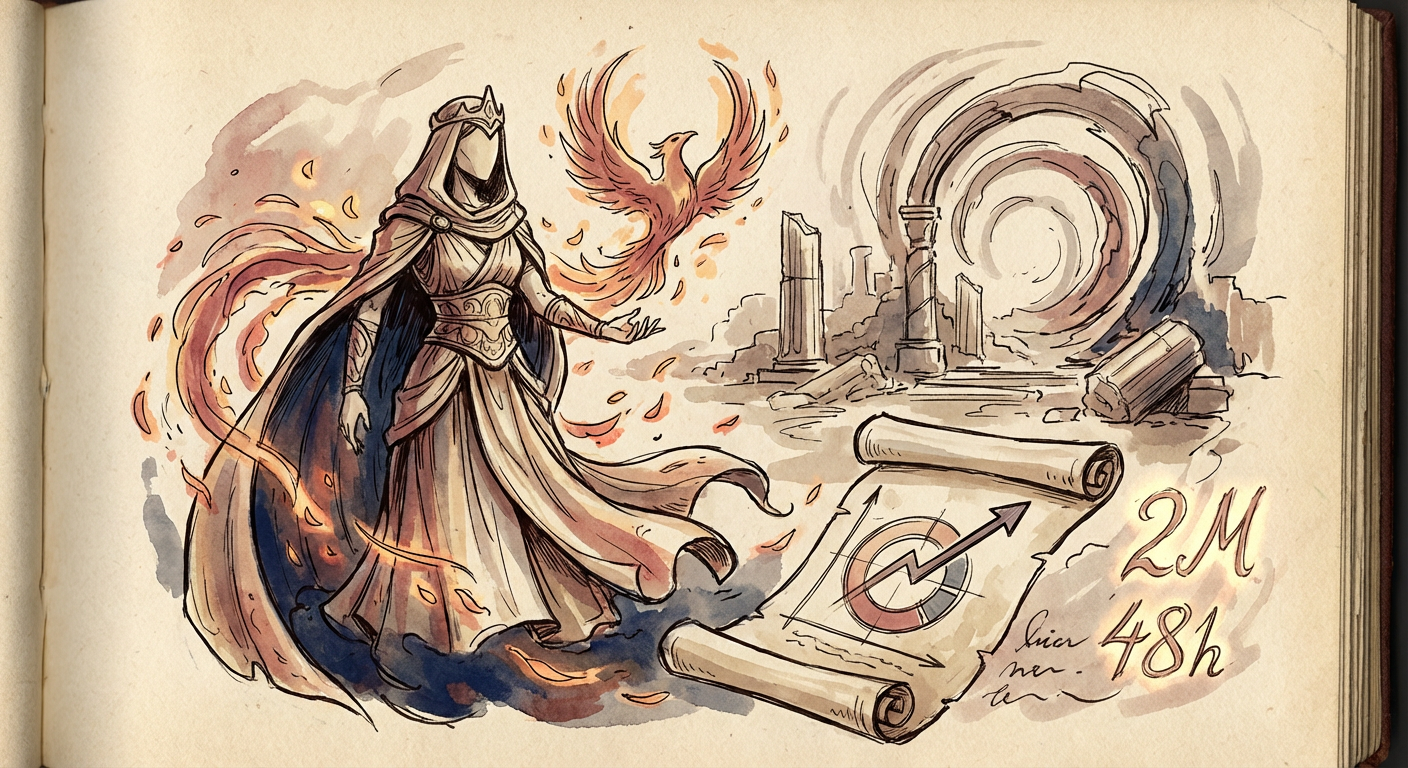
The crazy part? This wasn’t some miracle. It was design literacy. HoYoverse took the episodic storytelling structure that live service games demand and weaponized it. Instead of treating monthly updates like filler between the “real” story, they made every Version 5.x patch a narrative beat that actually mattered. The Pyro Archon’s backstory quest in Version 5.3 pulled over 2 million views on YouTube within 48 hours. Those aren’t whale bait numbers. Those are cultural moment numbers.

The Numbers Tell a Story of Their Own

Let me drop some context that should make AAA publishers uncomfortable. Genshin Impact crossed 5 billion dollars in cumulative revenue across mobile platforms by mid-2025. That’s not total lifetime revenue including consoles. That’s just iOS and Android. Meanwhile, studios that shipped eight-figure budget tentpole releases are watching player engagement crater two months post-launch because the story felt like it was written by committee and focus-grouped into lifelessness.

Here’s where it gets more interesting though. According to the data.ai State of Mobile Gaming 2025, mobile gaming isn’t just where the money is anymore. It’s where the design innovation lives. A GDC State of the Game Industry 2025 survey found that 41 percent of console and PC developers under 35 cut their teeth on live service mobile games before age 18. That’s not a minority. That’s a generation. These are the people who will be leading AAA studios in five years, and their design instincts come from the mobile space.

HoYoverse itself has 17,000 employees globally as of 2025. That’s bigger than Bethesda Game Studios. Bigger than a lot of traditional AAA shops still operating like it’s 2015. They’ve got the headcount to innovate, the revenue to take risks, and most importantly, they’ve got institutional knowledge of how to tell stories in a format that console gaming largely abandoned: the serialized narrative.

The Console Industry Is Watching (And Starting to Panic)

This is where the community pulse gets real. I’ve been talking to people in industry Discord servers, and there’s a palpable shift happening. Developers know that a whole cohort of players grew up experiencing narrative in Genshin, Honkai Impact, and similar titles. These players know what good pacing feels like across 6, 12, 18 months of storytelling. They know the difference between a cutscene that exists to explain mechanical nonsense and a character moment that actually earned its emotional weight through gameplay context.

When a major console release drops with a 40-hour main campaign that takes 35 of those hours to find its narrative footing, those players notice immediately. They’re not comparing it to God of War 2018 anymore. They’re comparing it to the standards set by a game that costs nothing upfront and drops new story content every six weeks. It’s a brutal lens, but it’s the lens an entire generation is applying to premium releases.

Why This Actually Matters Beyond the Discourse

This isn’t just about mobile games doing narrative better. It’s about what happens when design innovations that prove themselves in live service ecosystems start influencing how premium AAA titles get structured. The best analogy is probably the Fortnite effect, but for storytelling instead of cosmetics and building mechanics. Once players experience something that works, going back to the old way feels broken.

The mobile-to-console pipeline was always real in terms of mechanics and monetization. Souls-like games, battle passes, cosmetic stores, seasonal content. But what’s happening in 2025 and into 2026 is bigger than that. Narrative design is flowing upstream. Player expectations are shifting because they’ve literally played thousands of hours of better-structured storytelling. And it’s forcing conversations in AAA studios about why their 70-dollar game delivers less narrative payoff per hour than something that asks for zero dollars upfront.

The Conversation Continues

Here’s what I want to know though: are you seeing this in your own gaming? Have you noticed yourself getting impatient with slower-burn console narratives because you’re used to the tighter, more rewarding pacing of live service games? Or do you still prefer the cinematic sweep of traditional AAA storytelling, even if it takes longer to get interesting?

Drop your thoughts. Genuinely curious whether this feels like a real shift or if I’m just observing the normal cycle of gaming trends. Because if this generation of developers really does bring live service narrative discipline into premium releases, the next few years could get very strange very fast.

From Bronze to Actually Understanding the Game: How Path of Exile 2’s Ranked Season is Teaching a New Generation Real ARPG Literacy

The Moment Everything Clicked

You know that feeling when you finally understand why that build everyone calls “broken” is actually just broken for YOU because you haven’t learned the matchup yet? That’s the energy running through Path of Exile 2’s ranked ecosystem right now, and it’s genuinely something to watch. When Grinding Gear Games launched their first official Hardcore Ranked Season in February 2026, over 800,000 players showed up that opening weekend ready to get absolutely schooled. Most of them didn’t know it yet, but they were about to receive a masterclass in what it actually means to play an action RPG with depth.

From Bronze to Actually Understanding the Game: How Path of Exile 2's Ranked Season is Teaching a New Generation Real ARPG Literacy
From Bronze to Actually Understanding the Game: How Path of Exile 2’s Ranked Season is Teaching a New Generation Real ARPG Literacy

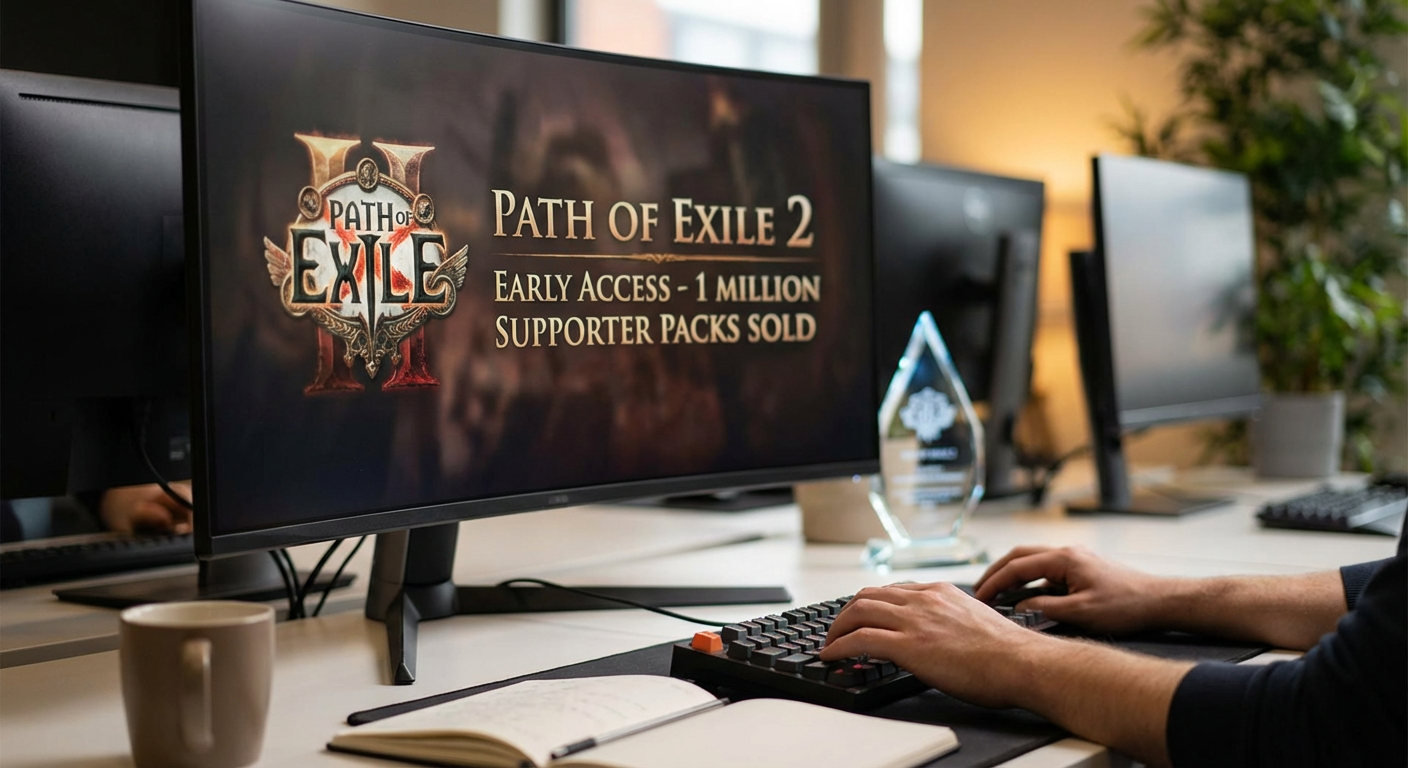
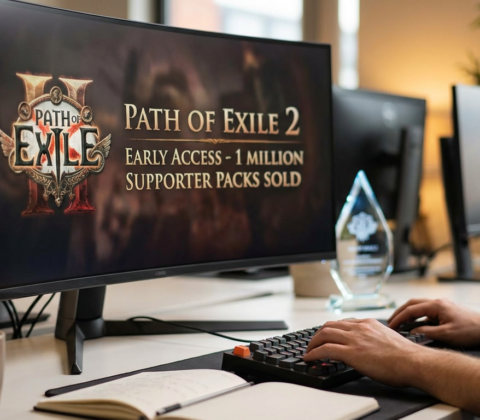
Path of Exile 2 entered Early Access back in December 2024 with a bang that still echoes through the community. Grinding Gear Games CEO Chris Wilson reported the game moved over a million supporter packs in that first month alone. That’s not just impressive numbers for a Kickstarter darling getting its shot at the big stage. That’s a signal that people were HUNGRY for something that respected their intelligence, something that refused to hold their hand through every decision. Something that would make them actually think.

The Design Philosophy That Breaks Casuals in the Best Way

Here’s what makes this whole situation so interesting from a design perspective. Path of Exile 2 didn’t accidentally create a ranked season that teaches game literacy. The developers at Grinding Gear Games deliberately crafted a system where mechanical understanding matters more than pure mechanical skill or gear investment. When you’re fighting for rank progression in hardcore mode, you can’t just faceroll your way through encounters. You have to actually understand what your character does, what enemies do, and why certain builds crumble while others thrive.

The Steam launch numbers tell part of this story. Path of Exile 2 hit 476,000 concurrent players in its first week, the highest peak for any action RPG that isn’t Diablo according to SteamDB records. But here’s the kicker: those numbers stayed substantial because the game kept people engaged through learning, not through grinding. The ranked season transformed what could have been a casual experience into something with genuine stakes. When you can lose your character permanently, suddenly every passive node selection matters. Suddenly you care about what your resistances are. Suddenly you’re reading patch notes instead of scrolling past them.

When the Meta Reveals Design Mastery

The Path of Exile 2 Official Development Manifesto from March 2026 did something that shocked a lot of veteran players. Grinding Gear Games acknowledged that fewer than 8% of their player base was actually completing Cruel difficulty, so they overhauled six of the twelve Ascendancy classes in Patch 0.2. This wasn’t them nerfing what was “overpowered.” This was them recognizing that certain class designs weren’t teaching players the lessons they needed to progress further.

That’s design literacy in action. Most developers would just buff other classes to compete. Grinding Gear Games instead asked themselves why players were failing, what those failures were teaching players, and whether the lesson being taught was actually the one they wanted to impart. When a player dies to a poorly designed Ascendancy, they’re not learning about the encounter mechanics or their own decision-making. They’re learning that the game is unfair. That’s a teaching moment wasted. By reworking those six classes, Grinding Gear Games transformed those failure states into meaningful feedback instead of frustration.

The Viewership Numbers That Prove It Works

Now let’s talk about something that really drives home how engaged this community has become. According to analytics from the StreamElements Gaming Report Q1 2026, Path of Exile 2 averaged 85,000 concurrent viewers on Twitch during its Season 1 launch week. That outperformed Diablo IV’s equivalent season launches. That’s not random. That’s people logging in to watch streamers figure out the ranked ladder, strategize around new builds, and most importantly, fail spectacularly and then learn why they failed.

The ranked season transformed Path of Exile 2 viewing from “watch someone grind” into “watch someone climb,” and climbing requires understanding. You’re not just watching someone with better reflexes or a fatter wallet. You’re watching someone make decisions in real time, and if those decisions are wrong, they die. Permanently. That tension creates engagement because it’s actually meaningful. The streamer isn’t going through motions. They’re playing for real stakes, and that translates through the screen directly to the viewer.

The Accidental Curriculum Everyone’s Taking

Here’s what really gets me about this whole situation. New players jumping into ranked aren’t consciously signing up for a game literacy course, but they’re getting one anyway. They start with their gut instincts about what sounds cool, then they hit a wall around Cruel difficulty and realize their resistances are chaos. They learn that capping resistances is non-negotiable. They die to a mechanic they never saw coming and learn to actually read enemy abilities. They get one-shot by something that seems random until they understand positioning. Every death in hardcore ranked teaches something that soft-core players can just ignore away.

The recursive part of this design is that as players get better, the ranked ladder rewards that improvement directly. Your rank is proof that you understand the game at a specific level. Bronze means you understand the fundamentals but haven’t internalized optimization. Silver means you’re making conscious decisions about which resistances matter most and why. The ladder itself becomes a skill-based feedback system that mirrors actual improvement.

What Path of Exile 2 has accidentally created is a ranked season that functions as the most effective tutorial the ARPG genre has ever seen. Not through hand-holding or exposition dumps, but through systems that make understanding the game a literal requirement for progression. If you want to rank up in hardcore ranked, you don’t just need reactions or builds you found on Reddit. You need to actually understand why those builds work. That’s the kind of respect for player intelligence that builds communities, not just player counts.