What Consumer-first criticism Reveals About Indie game development trends in 2026
This is one of those moments where paying attention changes what you do next. The topic of indie game development trends in 2026 rewards more careful attention than the typical coverage provides, and the reason is not complicated once you know where to look.
The part that most people miss is also what matters most: Godot 4 is dramatically lowering barriers for solo developers. When you examine what the evidence actually shows, the direct read of the situation is also the more accurate one.
The Criticism: Setting the Terms
Itch.io hosting over 900,000 games as of 2026 isn’t just a data point. It’s the structural condition that makes everything else in this analysis make sense. Context like this doesn’t age quickly. The conditions that produced it have been building for years, and their convergence makes this moment different from previous ones that looked similar from a distance.
Godot 4 is dramatically lowering barriers for solo developers. Games like Balatro prove one-person studios can reach millions. When you look at both together, a pattern emerges that Godot Engine has been tracking: the conditions are more durable than they first appear, and the implications stretch further than the immediate headlines suggest.
To understand why this matters, look at what was true three years ago versus what’s true now. The change isn’t simply in numbers. It’s qualitative. The participants, the infrastructure, and the incentive structures have all shifted in ways that build on each other rather than cancel out. That compounding effect is what’s worth tracking.
What makes this moment worth examining carefully isn’t the novelty but the confirmation. The underlying dynamics have been visible for some time. What’s new is that they’ve reached a threshold where ignoring them takes active effort rather than simple inattention. That threshold crossing is the event, not the underlying movement that produced it.
Game Pass and similar services improving discoverability for small titles fits this same picture. These elements don’t exist in separate silos. They’re reinforcing conditions in the same structural shift.
The Honest Review: The Analysis
Game Pass and similar services improving discoverability for small titles is where the analysis gets more specific. The surface reading is accessible and not wrong, but it misses the mechanism. And the mechanism is where the practical insight lives. The part most people miss is AI-assisted asset generation reshaping indie development pipelines, and understanding it changes what you do with the information.
Consider what AI-assisted asset generation reshaping indie development pipelines represents in context. It’s not a correlation that happened to appear. It’s a downstream consequence of structural factors that have been compounding. Previous readings of similar situations failed because they treated the symptom as the cause. The structural account is less satisfying as a headline but more useful as an analytical tool.
The comparison to prior cycles is instructive precisely because of where it breaks down. Superficially similar conditions resolved differently in previous iterations because the substrate was different. What Steam Next Fest generating over 2 million demo downloads per event represents is a substrate change. The kind that alters how elastic the system is rather than just its current value. Recognizing that distinction separates analysis from pattern-matching.
The skeptical counterargument deserves honest engagement: prior moments with similar surface characteristics didn’t produce the outcomes that seemed logical at the time. That history is real. What’s different now is Steam Next Fest generating over 2 million demo downloads per event, which isn’t a minor variable. It’s the infrastructure condition that previous cycles lacked. Infrastructure changes tend to stick around in ways that sentiment-driven changes don’t. itch.io is one source tracking this dimension with the care it requires.
There’s also a distributional question that often goes unaddressed in coverage of indie game development trends in 2026: who captures the value created by these shifts, and who absorbs the disruption costs? The aggregate picture can be positive while the distribution is uneven in ways that matter enormously to specific participants. Keeping that distributional lens in view is part of reading the situation clearly rather than simply optimistically.
Implications: What This Means If You Care About New releases
The implications of indie game development trends in 2026 stretch beyond the immediate context. Itch.io hosting over 900,000 games as of 2026 combined with the structural conditions described above creates a situation where adjacent fields, decisions, and communities get affected in ways that aren’t always visible from inside the primary story. The second-order effects are frequently more important than the first-order ones, and they’re where careful attention pays the highest returns.
Here’s where this perspective departs from the mainstream coverage: games like Balatro proving one-person studios can reach millions is a leading indicator rather than a lagging one. The people positioned to respond to what this signals, rather than to what it confirms, are the ones who will be less surprised by what comes next.
The practical response depends heavily on your position relative to the dynamics at play. For those closest to the core of indie game development trends in 2026, the implications are immediate and operational. For those at greater distance, the implications are strategic. It’s about understanding which adjacent pressures are building and which assumed stabilities are more fragile than they appear.
The practical question isn’t whether to engage with these dynamics but how. The answer depends on context, on what role you occupy relative to indie game development trends in 2026 and what your actual decision horizon is. But the first step is the same regardless: accurate understanding of what’s actually happening rather than what the most available narrative says is happening.
A few concrete observations are worth separating out from the broader analysis. First: Godot 4 dramatically lowering barriers for solo developers isn’t a temporary condition. It’s a new baseline. Second: AI-assisted asset generation reshaping indie development pipelines suggests the adjustment period isn’t over. Third, and most important: the organizations and individuals who are treating the current moment as a new steady state rather than a transition are making a categorization error that will be costly to unwind later.
The Case Against: What the Critics Get Right
Intellectual honesty requires acknowledging the strongest counterarguments, not just the weakest ones. The case against the optimistic reading of indie game development trends in 2026 isn’t trivial. There are structural vulnerabilities in the current picture that deserve direct engagement rather than dismissal.
The most serious objection is about sustainability. Games like Balatro proving one-person studios can reach millions can be read not as a foundation but as a ceiling. A point beyond which growth becomes self-limiting because of the very dynamics that produced it. If the current state has already incorporated most of the available supply of early-adopting participants, the remaining growth curve may be structurally shallower than the recent trajectory implies.
There’s also the policy and regulatory dimension. Itch.io hosting over 900,000 games as of 2026 describes a condition in a relatively permissive environment. Regulatory responses to the scale implied by these numbers aren’t inevitable, but they’re not implausible either. The organizations that are planning as though the current regulatory environment is permanent are making an assumption that the history of fast-growing sectors doesn’t support.
The rebuttal to these concerns isn’t that they’re wrong. It’s that they’re already partially priced into the current state of the field. Steam Next Fest generating over 2 million demo downloads per event reflects an environment where participants are already adapting to constraints rather than operating in an unconstrained space. The adjustment capacity of the ecosystem is higher than a purely top-down view of the risks suggests.
Looking Forward
The trajectory here is clearer than the pace. Making predictions about when specific thresholds will be crossed is genuinely difficult, and anyone claiming precision about timelines should be treated with skepticism. But the direction, toward Itch.io hosting over 900,000 games as of 2026 and continued development of the conditions described above, is supported by the evidence in a way that doesn’t depend on a single variable going right.
Steam Next Fest generating over 2 million demo downloads per event is the variable to watch as the leading indicator. Historical patterns suggest it moves first, with broader metrics following with some lag. This doesn’t make the outcome certain, but it makes it legible. And legibility is the precondition for good decisions.
Three questions are worth holding as the story develops. First: are the structural conditions that enabled the current state durable, or are they cyclical? Second: who is positioned to benefit from the next phase, and does that differ materially from who benefited in the current phase? Third: what would a clean falsification of the optimistic thesis look like, and is there any evidence of that signal emerging? These questions don’t need answers today, but having asked them changes what you notice in the months ahead.
The action from here is straightforward, even when the situation isn’t. The current moment in indie game development trends in 2026 is one where the people who have built an accurate model of the underlying dynamics are better positioned than the people who are relying on the surface story. Building that model isn’t a quick task, but it’s a doable one. This analysis is intended as one input into it.
If you’ve put time in, how does this track with your experience?

Khmaniacs — Games Worth Your Time
Khmaniacs — Games Worth Your Time
Reviews, guides, and coverage for players who take games seriously.
We’re gamers writing for gamers. No fluff pieces or sanitized press releases here. Just honest, thorough coverage of games, the industry mess, and everything in between. Whether you’re grinding ranked matches or hunting down obscure indies…
Topics we cover: Reviews · Guides & Walkthroughs · Esports · Indie Games · Retro · Industry
AI and the Creative Renaissance: How Algorithms Are Painting the Future
Hey tech explorers, art aficionados, and those of you who, like me, can’t draw a straight line but are fascinated by the way tech is shaping artistic landscapes! Today, we’re diving into a topic that’s stirring up a colorful, algorithm-driven storm: AI in creative arts. Yep, we’re talking about computers that spit out poetry and algorithms that paint like Picasso. So grab a cup of your preferred caffeine delivery method, and let’s unwrap this canvas of creativity, shall we?
The Dawn of Creative Machines
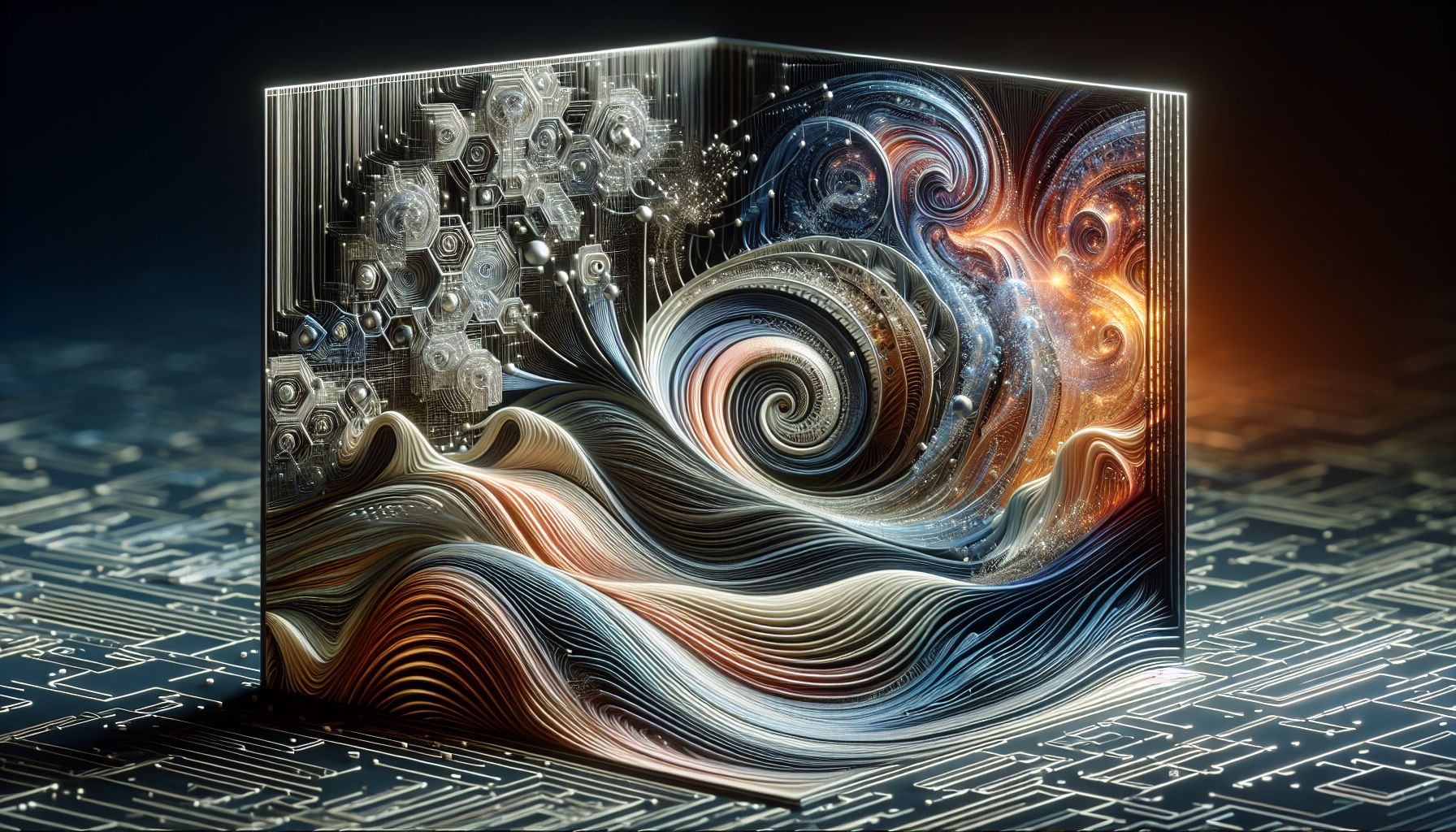
A few years back, if someone told me machines could pull off being artsy, I’d have chuckled and gone back to fiddling with ML models like they were my digital Lego bricks. Fast forward to today, and artificial intelligence isn’t just helping artists, it’s composing its own symphonies. From Google’s DeepDream surreal landscapes to OpenAI’s DALL-E creating images from textual prompts, AI isn’t stepping onto the scene, it’s stage-diving right into it.
A New Brush in the Artist’s Toolkit
AI’s foray into art is more like an added color on the artist’s palette. These models are tools that take traditional mediums and give them a little digital magic. Artists are using these algorithms to push boundaries, explore new styles, and rethink the creative process. Imagine being able to conjure up ideas and styles you couldn’t even fathom and then refining them with your own touch. That’s collaboration, silicon style.
Algorithms with an Artistic Flair
Alright, let’s break down some of these terminologies and technologies that are giving art an electronic edge.
GANs—The Picasso Algorithms
Generative Adversarial Networks, or GANs, have been the undisputed rockstars behind many AI art projects. Invented by Ian Goodfellow and his team back in 2014, GANs work through two neural networks playing a game of cat and mouse. One generates what it thinks is art, while the other critiques it like a persnickety art dealer. This back-and-forth polishes the AI’s skills, creating outputs that are sometimes mind-bogglingly phenomenal.
Remember when the AI-created painting “Portrait of Edmond de Belamy” sold for a hefty sum at Christie’s? That was a GAN at work! It’s like Pictionary, but your fellow player is a brainy algorithm with potentially limitless creativity.
NLP—The Poet’s Silicon Muse
And let’s not forget about AI’s entrance into the literary scene. Natural Language Processing (NLP) models like GPT-3 are crafting prose that can pass for human handiwork. Picture a digital Shakespeare that can write everything from haikus for your cat to scripts for films. Imperfect, sure, but getting better with every round.
The Good, The Bad, and The Algorithmic
As much as there’s to love about AI’s artistic flair, it’s not all sunshine and happy little trees, as Bob Ross would say. There are plenty of challenges we’re still muddling through.
The Copyright Conundrum
The legal landscape surrounding AI-generated art is a maze filled with intellectual property booby traps. Who actually owns an AI-generated piece—the developer of the algorithm, the user of the tool, or some undefined ‘AI entity’? Until we sort this out, we’re walking a fine line, balancing innovation with the need to protect creators’ rights.
The Human Element
There’s also the fear that AI could devalue the human spirit in art. Critics say automating creativity undermines the emotional connection we have with human-made works. But here’s the deal—AI isn’t a replacement; it’s an augmentation. Think of it as a keyboard for a composer or Photoshop for a graphic artist. It’s a tool that helps us explore new creative territories, not erase them.
Gazing into the Future Canvas
While I’m not swiping left on Picasso just yet, AI’s role in arts points to an exciting future. Here’s what I think is coming, with the usual disclaimer that I’m no oracle.
More Collaborations Coming
I see way more collaborations between humans and AI on the horizon. Picture this: you’re co-writing a novel with an algorithm, or perhaps working on a film where half the storyboard was dreamed up in silicon. The potential is vast and, I dare say, quite inspiring.
Education and Accessibility
As AI tools become more accessible, they’re democratizing creativity. Aspiring artists who couldn’t afford high-end tools are now able to access creative platforms that use AI, bringing diverse voices into the creative mix.
Customization and Personalization
More personalized art experiences are on the horizon. Want a painting that matches your mood? Or, perhaps, music that shifts with your heart rate? The combination of AI with wearables might just offer that personalized cultural experience we’ve only seen in science fiction.
Wrapping Up the Digital Easel
At the end of the day, whether you’re a technologist, an artist, or someone dabbling in both, the blend of AI and creativity opens up an era full of exciting possibilities and new questions. While AI won’t be donning a beret and setting up an easel in Montmartre anytime soon, it is offering tools that will help reshape creativity for generations to come.
So let’s keep pushing the boundaries, bridging the gap between circuits and sensibility. The brush is in our hands, or perhaps in AI’s invisible ones, and the canvas is boundless. Keep creating, stay curious, and as always, let’s paint that future one bit at a time.
AI Artistry: The Creative Renaissance We’ve All Been Waiting For
Hey fellow tech enthusiasts! Today, I’m diving into a topic that’s really got my gears spinning: the emergence of Artificial Intelligence in the creative arts. It’s exciting, it’s futuristic, and honestly, it feels like we’re watching something historic unfold. So, grab your virtual paintbrushes and synthesizers. We’re about to explore how AI is completely flipping the creative arts on its head.
The Dawn of AI-Crafted Masterpieces
Let’s kick things off with a bit of context. Once upon a time, the arts were seen as the ultimate bastion of human creativity, an arena where only the human touch could truly shine. Well, times have changed. AI is now a full participant in the creative process, and it’s producing some seriously impressive stuff! From painting and poetry to music and beyond, AI’s artistic abilities are getting sharper by the day.
One of my favorites in this space is OpenAI’s DALL-E 2, which can generate wild images from text prompts. Just describe a scene, and boom! You’ve got a masterpiece. It’s almost like AI is playing Bob Ross, minus the afro and the happy little accidents.
Unleashing Creative Potential
I’m often asked by skeptics, “But can AI truly be creative?” Here’s the thing: Yes, it can! Creativity isn’t just about coming up with new ideas. It’s also about synthesis and innovation. And machines are incredibly good at these things. AI can analyze millions of data points, identify patterns, and create something entirely new yet familiar.
Take AI in music. David Bowie once used algorithms to shuffle lines of his song lyrics for new inspiration. Today, companies like Amper Music are using AI to compose entire soundtracks. The best part? Musicians can collaborate with these AI systems to co-create. It’s like having a super-talented, tireless bandmate with solid taste.
AI in Storytelling: The New Narrative Architects
Storytelling has seen fascinating collaboration between human and machine. Tools like OpenAI’s GPT-3 can take a writer’s outline and flesh it out into a compelling narrative with surprising twists and turns. I experimented once by feeding GPT-3 some character profiles and a basic plot. The result? A short story that was both cohesive and compelling, with characters that felt like they could walk right off the page.
Now, I’m not saying we should hand over the keys to writers’ rooms everywhere. But these tools can definitely help with breaking writer’s block. They can push narratives in directions human writers might not consider.
The Democratization of Art
Perhaps one of the most interesting aspects of AI in the creative arts is its potential to democratize art. It’s leveling the playing field, making creativity accessible to those who might not have had the tools, training, or resources to explore their artistic side. If you’ve ever tried your hand at GarageBand or Canva, you’re seeing the early stages of this movement.
Look at platforms like Artbreeder, where anyone can generate unique digital art pieces with just a few clicks. It removes the intimidation factor that often stifles creativity.
Ethical and Societal Implications
Of course, with great power comes great responsibility. The rise of AI in the arts raises some thorny ethical questions. Who owns an AI-generated piece of art? What happens when deepfakes blur the line between reality and illusion? These are genuinely tricky questions that need answers as we venture further into AI’s creative capabilities.
There’s also the valid concern about AI replacing human jobs in the creative industry. While discussions often turn apocalyptic, I believe that AI won’t replace creatives, but rather, will enhance their capabilities. Think of AI as a tool, not a replacement.
The Road Ahead
Looking forward, the future of AI in the creative arts is packed with possibilities. As AI systems continue to evolve, they will likely become even more sophisticated, creating art forms we’ve yet to imagine. Picture a future where your AI interface tailors entire art galleries based on your mood or a melody composed by AI in collaboration with an artist on the other side of the world. The possibilities genuinely feel endless.
Machine learning models will become more explainable and even better at understanding subtlety, allowing for deeper, more meaningful artistic collaborations. That’s where it gets fascinating: AI learning to adapt to and appreciate the details that define human creativity.
Conclusion
So, are we on the brink of a creative revolution driven by artificial intelligence? I think so! While challenges and questions remain, AI’s role in the creative arts signals a new era of collaboration and innovation. In a couple of years, we might look back and wonder how we ever created without our digital muses.
So, what’s your take? Are you ready to pick up an AI tool and start crafting your own masterpiece? I’d love to hear your thoughts and maybe even challenge each other to a friendly AI painting duel. Until then, keep creating and keep dreaming. The future of art is here, and it’s pretty wild!
Catch you on the next breakthrough,
[Your Name]