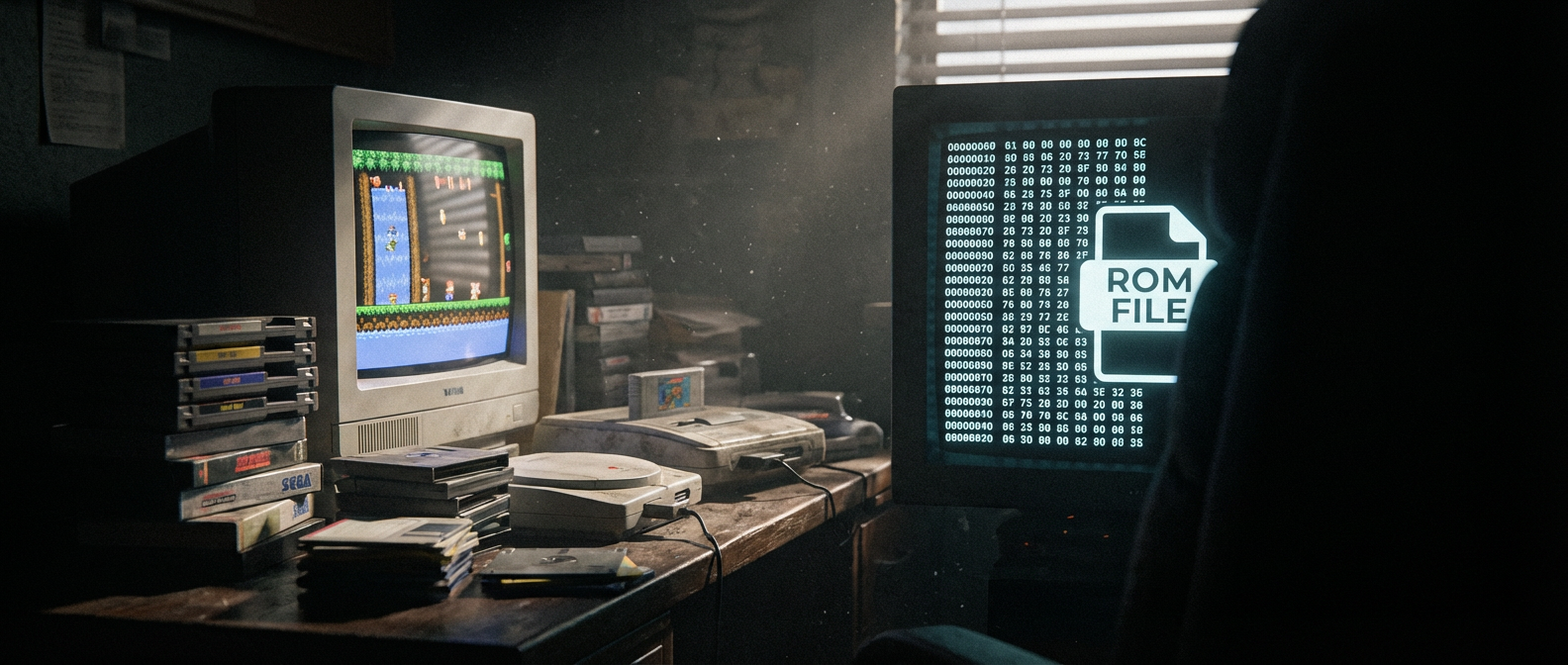
The Digital Museum Crisis: Why ROM Preservation Matters More Than Copyright Wars
The Vanishing Vault of Gaming History
Imagine walking into the Louvre only to discover that 87 percent of its masterpieces had been removed, locked away in private vaults, or simply lost to time. This is exactly what’s happening to video game preservation right now. Nearly nine out of ten classic games have disappeared from legal availability. The Video Game History Foundation recently put hard numbers to this cultural disaster, and honestly? The results are depressing as hell.
This goes way beyond nostalgia trips. Video games are one of the most important cultural and artistic movements of the past fifty years, yet preservation gets maybe a tenth of the attention that film or literature receives. Books can be reprinted. Films can be remastered. But games? They’re these complex beasts of hardware, software, and context that make preservation incredibly tricky.
Here’s the kicker: this crisis isn’t happening because preservation is technically impossible. It’s happening because of legal paralysis. While museums worldwide display priceless artifacts behind glass, our digital heritage crumbles behind copyright walls that often protect nothing but corporate pride. We’re creating a weird form of cultural amnesia where entire genres and artistic movements just vanish.
Digital Archaeology in Action
The Internet Archive has become an unlikely hero here, hosting thousands of playable vintage titles under specific Digital Millennium Copyright Act exemptions. The Internet Archive games collection isn’t just file hosting. It’s a living museum where you can actually experience interactive history.
These preservation efforts show just how much design evolution is hidden in gaming’s timeline. Early arcade games had this pure mechanical precision where every pixel and sound effect mattered. Home console titles from the ’80s showcase incredible creativity within brutal technical limits. The design innovations from that era? Modern developers still study and steal from them.
The preservation movement also digs up forgotten experimental periods. Those weird mid-’90s multimedia adventures, early online gaming experiments, strange genre mashups. All of this stuff adds crucial context for understanding how interactive entertainment actually evolved. Without access to these games, today’s designers are working blind, missing huge chunks of what their medium can do.
The Corporate Preservation Paradox
The gaming industry’s relationship with its own history is absolutely bizarre. Major publishers aggressively hunt down ROM distribution sites while completely failing to make their classic catalogs legally available. Nintendo is the worst offender here. They’ll nuke fan projects and ROM archives with ruthless efficiency while keeping most of their library locked in a vault.
This enforcement-without-preservation strategy tells you everything about how publishers really view their back catalogs. They’re legal assets, not cultural artifacts worth protecting. The irony? Many current industry leaders built their careers studying the exact games they’re now keeping from the public.
Publishers stay weirdly quiet when you ask about preservation directly, but their legal departments will chase down 30-year-old intellectual property with the intensity of bloodhounds. They’re treating gaming history like private property instead of the shared cultural foundation it actually is. This completely misses how collaborative and iterative game development really works.
Hardware Renaissance and Legal Evolution
The growing market for premium emulation hardware like Analogue’s FPGA consoles and open-source MiSTer devices proves there’s real consumer demand for preserved gaming experiences. These systems obsess over hardware authenticity, recreating original gaming environments with incredible accuracy. Their success proves preservation isn’t just academic curiosity. It’s a viable market.
Legal frameworks have started catching up. The Library of Congress expanded and renewed exemptions for game preservation in 2024, finally recognizing that traditional copyright models suck at cultural preservation. These exemptions give crucial legal cover to institutions trying to maintain gaming history, though they’re still pretty limited.
The hardware preservation movement also highlights something important about early game development. Original hardware imposed specific constraints that shaped entire genres. Racing games designed for CRT displays used scan-line effects and color bleeding as deliberate design elements. Strip away that context and you’re fundamentally changing the artistic experience. It’s like looking at Renaissance frescoes under harsh fluorescent lighting.
Designing Tomorrow’s Digital Heritage
The ROM debate isn’t really about legal technicalities or nostalgic feelings. It’s about fundamental questions: Who owns culture? How do we preserve art? What do creators inherit from previous generations? Video games are collaborative art forms that build on previous innovations, making access to gaming history essential for the medium to advance.
Contemporary indie developers constantly cite classic games as influences, but legal restrictions increasingly separate new creators from their medium’s foundational works. This artificial scarcity hurts the entire creative ecosystem. Natural artistic evolution depends on studying and building upon previous innovations.
The preservation challenge also shows video games’ unique position as both commercial products and cultural artifacts. Unlike traditional media, games are functional objects requiring ongoing maintenance and technical expertise to stay accessible. This reality demands new preservation models that balance legitimate commercial interests with cultural stewardship.
Gaming preservation’s future depends on recognizing video games as legitimate cultural artifacts deserving protection comparable to other art forms. This requires industry acknowledgment that preservation helps innovation instead of threatening it. The ROM debate might seem technical, but it determines whether future generations inherit complete gaming heritage or just fragments of a lost digital civilization. What role will you play in preserving this irreplaceable cultural foundation?
Comments are Disabled