The Digital Museum Crisis: Why ROM Preservation Matters More Than Copyright Wars
The Vanishing Vault of Gaming History
Imagine walking into the Louvre only to discover that 87 percent of its masterpieces had been removed, locked away in private vaults, or simply lost to time. This is exactly what’s happening to video game history right now. Nearly nine out of ten classic games have disappeared from legal availability. The Video Game History Foundation recently put numbers to this cultural disaster, and frankly, it’s worse than I expected. Decades of gaming history are hanging by the thinnest digital threads.
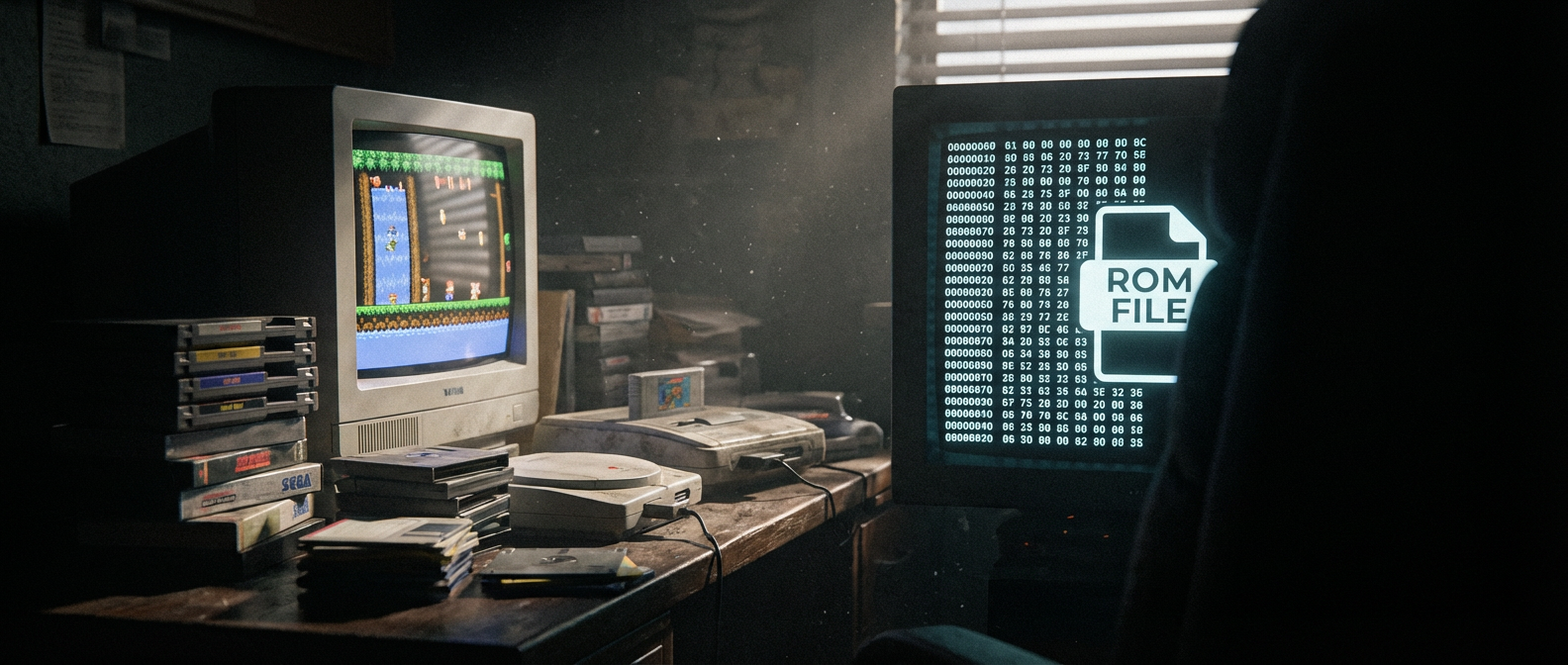
This goes way beyond nostalgia. Video games are one of the most important cultural and artistic movements of the past fifty years, yet their preservation gets a fraction of the attention given to film, literature, or visual arts. Unlike books that can be reprinted or films that can be remastered, video games exist as complex combinations of hardware, software, and context. That makes preservation uniquely challenging.
Here’s what really gets me: this crisis doesn’t come from technical impossibility. It comes from legal paralysis. While museums worldwide display priceless artifacts behind glass, our digital heritage crumbles behind copyright walls that often have no active commercial purpose. The result is a weird form of cultural amnesia where entire genres, development philosophies, and artistic movements risk permanent erasure.
Digital Archaeology in Action
Organizations like the Internet Archive have become unlikely heroes in this preservation battle, hosting thousands of playable vintage titles under specific Digital Millennium Copyright Act exemptions. The Internet Archive games collection is more than just file hosting. It’s a living museum where you can actually experience interactive history firsthand.
These preservation efforts reveal incredible design evolution hidden in gaming’s timeline. Early arcade games show pure mechanical precision, where every pixel and sound effect had essential gameplay functions. Home console titles from the 1980s display remarkable creativity within severe technical constraints. Those limitations led to design innovations that modern developers still study and copy.
The preservation movement also brings forgotten experimental periods back to light. Mid-1990s multimedia adventures, early online gaming experiments, weird genre-blending curiosities. They all add essential context for understanding how interactive entertainment evolved. Without access to these works, today’s designers lose crucial reference points for understanding what their medium can do.
The Corporate Preservation Paradox
The gaming industry’s relationship with its own history is deeply troubling. Major publishers aggressively pursue copyright enforcement against ROM distribution sites while simultaneously failing to make their classic catalogs legally accessible. Nintendo’s systematic DMCA campaigns against fan-made projects and ROM archives demonstrate this paradox most clearly. The company removes access to games it apparently has no intention of re-releasing.
This enforcement-without-preservation strategy suggests that many publishers view their back catalogs primarily as legal assets rather than cultural artifacts worth protecting. The irony hits hard when you consider that many current industry leaders built their careers studying and learning from the very games now locked away from public access.
Publishers often stay conspicuously silent on preservation questions while their legal departments pursue decades-old intellectual property with surprising energy. This approach treats gaming history as private property rather than shared cultural foundation. It completely misunderstands the medium’s collaborative and iterative nature.
Hardware Renaissance and Legal Evolution
The growing market for premium emulation hardware like Analogue’s FPGA consoles and open-source MiSTer devices shows real consumer demand for preserved gaming experiences. These systems approach preservation through hardware authenticity, recreating original gaming environments with obsessive accuracy. The success of such products proves that preservation is a viable market segment, not just academic curiosity.
Legal frameworks have started evolving to acknowledge preservation’s importance. The Library of Congress expanded and renewed exemptions for game preservation in 2024, recognizing that traditional copyright models poorly handle cultural preservation goals. These exemptions provide crucial legal cover for institutions trying to maintain gaming history, though they remain limited in scope and application.
The hardware preservation movement also highlights the artisanal aspects of early game development. Original hardware imposed specific aesthetic and functional constraints that shaped entire genres. Racing games designed for CRT displays used scan-line effects and color bleeding as deliberate design elements. Remove these contextual factors and you fundamentally alter the artistic experience. It’s like viewing Renaissance frescoes under fluorescent lighting.
Designing Tomorrow’s Digital Heritage
The ROM debate concerns more than legal technicalities or nostalgic indulgence. It addresses fundamental questions about cultural ownership, artistic preservation, and creative inheritance. Video games are collaborative art forms that build upon previous innovations, making access to gaming history essential for the medium’s advancement.
Contemporary indie developers frequently cite classic games as primary influences, yet legal restrictions increasingly separate new creators from their medium’s foundational works. This artificial scarcity impoverishes the entire creative ecosystem, preventing natural artistic evolution that depends on studying and building upon previous innovations.
The preservation challenge also reveals video games’ unique position as both commercial products and cultural artifacts. Unlike traditional media, games exist as functional objects requiring ongoing maintenance and technical expertise to remain accessible. This reality demands new preservation models that balance legitimate commercial interests with cultural stewardship responsibilities.
The future of gaming preservation depends on recognizing video games as legitimate cultural artifacts deserving protection comparable to other art forms. This recognition requires industry acknowledgment that preservation helps innovation rather than threatening it. The ROM debate may seem technical, but it ultimately determines whether future generations will inherit a complete gaming heritage or merely fragments of a lost digital civilization. What role will you play in preserving this irreplaceable cultural foundation?
Comments are Disabled