Posts in Category: Default
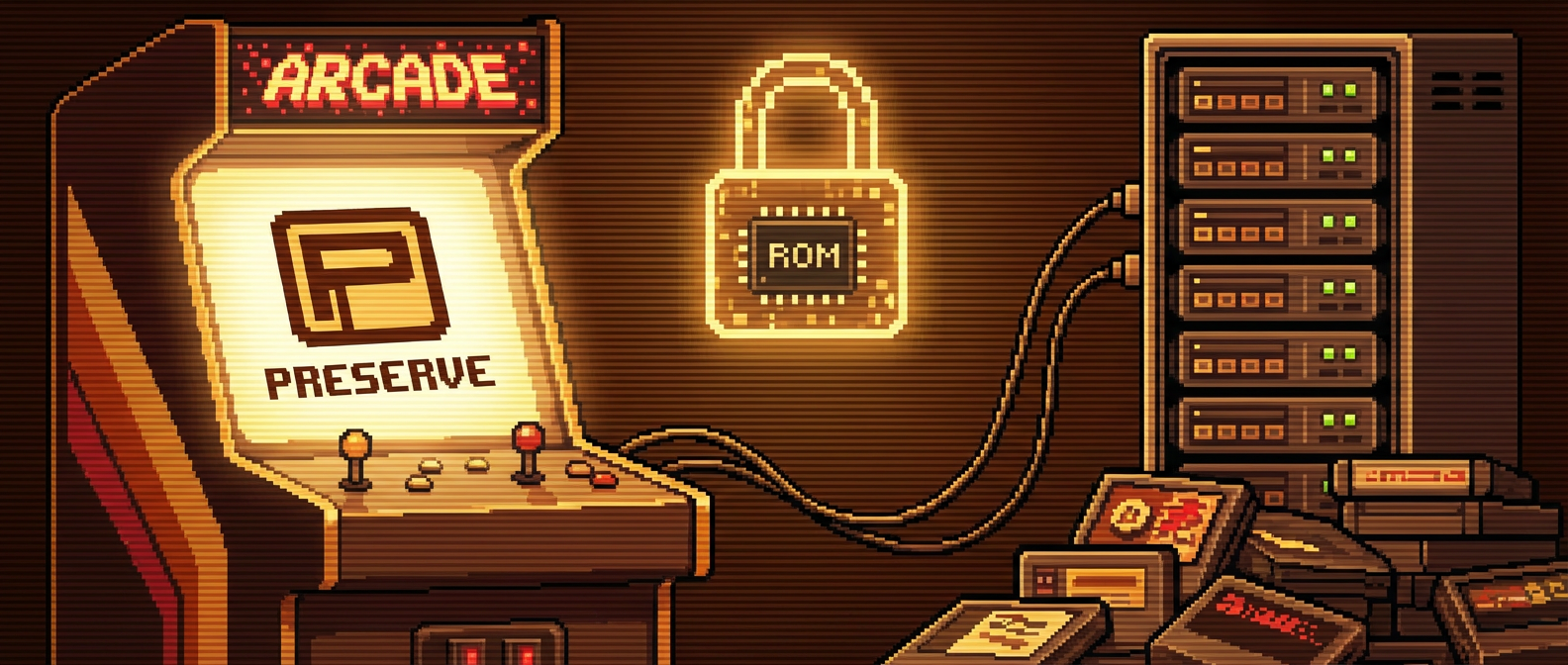
The Vanishing Act: Why Gaming’s Greatest Works Are Disappearing Into Digital Oblivion
The Great Digital Disappearing Act
Imagine walking into a library where nearly nine out of ten books have vanished from the shelves, their stories lost to time and corporate indifference. This isn’t some dystopian fiction—it’s what’s happening to video games right now. The Video Game History Foundation dropped a bombshell recently: 87 percent of classic games released before 2010 are completely inaccessible through legal means. We’re not talking about obscure shovelware here. These are the games that defined entire genres, introduced mechanics we still use today, and created the foundation for everything we play now.
This goes way deeper than nostalgia. Video games combine visual art, music, storytelling, and technology in ways that were impossible before the medium existed. When we lose access to the original versions of iconic franchises or weird experimental indies that broke all the rules, we’re losing actual art. The kind that influenced generations of creators and pushed technical boundaries that seemed impossible at the time.
Here’s the thing: games are stuck to their hardware in ways movies and books aren’t. When Sony stops making PS2s and doesn’t bother with backwards compatibility, thousands of games just… disappear. All those hand-crafted sprite animations and revolutionary sound techniques become as unreachable as a painting locked in someone’s private vault. The technical wizardry developers pulled off with limited RAM and processing power? Gone. The creative solutions they found for hardware limitations? Lost.

The ROM Preservation Paradox
This is where ROM preservation comes in, and honestly, it’s both inspiring and frustrating. Dedicated archivists and retro gaming fans have basically become the Library of Alexandria for video games. ROM files (digital copies of cartridges and discs) are often the only reason classic games still exist in playable form. The Internet Archive games collection is doing incredible work here, hosting thousands of vintage titles under DMCA exemptions that recognize their cultural value.
But here’s where it gets complicated. This preservation work exists in legal quicksand. Copyright law treats a groundbreaking 1985 platformer the same as a blockbuster released last week, even when that old game influenced thirty years of subsequent design. The careful level construction, the innovative mechanics, the technical solutions that seemed impossible at the time—all of it is locked behind laws designed for completely different types of media.
The ROM community takes this work seriously, though. We’re talking museum-level documentation standards. They’re not just copying files—they’re capturing the specific glitches, timing quirks, and hardware behaviors that made these games unique. It’s preservation work that rivals what you’d see for priceless historical artifacts, because that’s essentially what these are.
Corporate Enforcement Versus Cultural Heritage
Nintendo is probably the most aggressive about shutting down ROM sites, and I get why that frustrates people. They’ve issued thousands of takedown notices for games that are decades old, including fan translations and mods that are often the only way to experience certain titles. Yes, they have the legal right to protect their IP. But the cultural cost is huge when you’re removing access to games that demonstrate the evolution of design philosophy and technical innovation.
What really gets me is that this enforcement often targets transformative work too. Fan translations that make Japan-only games accessible? Gone. ROM hacks that show creative reinterpretations of classic mechanics? Removed. Preservation projects that keep games playable on modern systems? Shut down. It all gets lumped together with straight piracy, which creates this chilling effect on legitimate preservation efforts.
The irony is thick here. Many of these targeted games represent Nintendo’s greatest artistic achievements. Super Metroid’s atmosphere and level design. The tight platforming in Super Mario World. The storytelling innovations in Chrono Trigger. By aggressively protecting these without offering legal alternatives, companies are accidentally undermining appreciation for their own creative legacy.
Hardware Solutions and Digital Archaeology
FPGA-based hardware like Analogue’s consoles and the MiSTer project offer a more sophisticated approach. Instead of software emulation, these devices recreate the actual electronic behavior of original hardware. Every timing quirk, every audio characteristic, every visual glitch that defined the original experience gets preserved.
This matters more than you might think. The way graphics render, how sound processes, how controllers respond—these subtle differences can completely change how a game feels. Software emulation often smooths out the rough edges that were actually part of the artistic intent. FPGA recreation keeps those nuances intact, ensuring future players experience these games as their creators meant them to be played.
The fact that people will drop $500+ on these specialized devices shows there’s real demand for authentic experiences. This isn’t just nostalgia—players recognize the artistic and design value in classic games and want to experience them properly. That suggests a broader cultural appreciation for video game craftsmanship that goes beyond casual entertainment.
Legal Evolution and Future Preservation
There’s some hope on the legal front. The Library of Congress expanded DMCA exemptions in 2024 to better protect institutional preservation work. They’re finally acknowledging that video games deserve the same archival consideration as other art forms. These frameworks start to distinguish between preservation for cultural purposes and straight-up commercial piracy.
But most major publishers still won’t touch this issue. They’ll aggressively protect their IP while staying completely silent on preservation concerns. This leaves independent archivists and institutions to navigate complex legal terrain alone, trying to save works that represent decades of creative and technical innovation. The survival of culturally important games depends more on volunteer dedication than systematic institutional support.
We need to start treating video games as cultural artifacts instead of just commercial products. The creativity, innovation, and artistic achievement in these works deserves institutional support and legal protection. As gaming continues to mature as an art form, preserving its heritage becomes more urgent every year.
What parts of game preservation worry you most? The intersection of technology, law, and cultural responsibility in gaming creates challenges that affect everyone who cares about this medium. We need creative solutions and ongoing discussion from players, developers, and policymakers who understand what’s at stake here.
What Community journalism Reveals About AI roleplaying games and the future of interactive fiction
This is one of those moments where paying attention changes what you do next. The topic of AI roleplaying games and the future of interactive fiction rewards more careful attention than the typical coverage provides, and the reason is not complicated once you know where to look.
The part of this that most people miss is also the part that matters most: when you look at it through the lens of community journalism, Latitude AI Dungeon reached 2 million users within months of launch on GPT-2. The embedded and current read of the situation is also the more accurate one once you examine what the evidence actually shows.

The Journalism: Setting the Terms
AI Dungeon launched in 2019 and became the first mainstream AI-driven RPG with millions of users. This isn’t just another data point in the story of AI roleplaying games and the future of interactive fiction. It’s the structural condition that makes everything else in this analysis actually make sense. Context like this doesn’t age quickly. The conditions that produced it have been building for years, and the convergence is what makes the current moment different from previous moments that looked similar from a distance.
Latitude AI Dungeon reached 2 million users within months of launch on GPT-2, and then we saw KoboldAI and NovelAI emerge as alternatives with local model support and fewer content restrictions. When you look at both together, a pattern emerges that AI Dungeon has been covering from the inside: the conditions are more durable than they first appear, and the implications extend further than the immediate headline suggests.
To understand why this matters, it helps to look at what was true three years ago versus what is true now. The delta isn’t simply quantitative, it’s qualitative. The participants, the infrastructure, and the incentive structures have all shifted in ways that compound rather than cancel out. That compounding is the most important element to track.
What makes this moment worth examining carefully isn’t the novelty but the confirmation. The underlying dynamics have been visible for some time. What’s new is that they’ve reached a threshold where ignoring them requires active effort rather than simple inattention. That threshold crossing is the event, not the underlying movement that produced it.
And character.AI reaching 20 million daily active users largely through roleplay use cases is part of that same picture. These elements don’t exist in separate silos. They’re reinforcing conditions in the same structural shift.
The Community Pulse: The Analysis
Character.AI reaching 20 million daily active users largely through roleplay use cases is where the analysis gets more specific. The surface reading is accessible and not wrong, but it misses the mechanism. The mechanism is where the practical insight lives. The part of this that most people miss is also the part that matters most: tabletop RPG communities are using LLMs as dungeon masters in solo play sessions, and understanding this changes what you do with the information.
Consider what tabletop RPG communities using LLMs as dungeon masters in solo play sessions represents in context. It’s not a correlation that happened to appear. It’s a downstream consequence of structural factors that have been compounding. Previous readings of similar situations failed because they treated the symptom as the cause. The structural account is less satisfying as a headline but more useful as an analytical tool.
The comparison to prior cycles is instructive precisely because of where it breaks down. Superficially similar conditions resolved differently in previous iterations because the substrate was different. AI-generated branching narratives are challenging traditional visual novel and CYOA formats, and this represents a substrate change. The kind that alters the elasticity of the system rather than just its current value. Recognizing that distinction is what separates analysis from pattern-matching.
The skeptical counterargument deserves honest engagement: prior moments with similar surface characteristics didn’t produce the outcomes that seemed logical at the time. That history is real. What’s different now is that AI-generated branching narratives are challenging traditional visual novel and CYOA formats, which isn’t a minor variable. It’s the infrastructure condition that previous cycles lacked. Infrastructure changes tend to be persistent in ways that sentiment-driven changes are not. NovelAI creative writing is one source tracking this dimension with the rigor it requires.
There’s also a distributional question that often goes unaddressed in coverage of AI roleplaying games and the future of interactive fiction: who captures the value created by these shifts, and who absorbs the disruption costs? The aggregate picture can be positive while the distribution is uneven in ways that matter enormously to specific participants. Keeping that distributional lens in view is part of reading the situation clearly rather than simply optimistically.
Implications: What This Means If You Care About Patch reception
The implications of AI roleplaying games and the future of interactive fiction extend beyond the immediate context. AI Dungeon launched in 2019 and became the first mainstream AI-driven RPG with millions of users. Combined with the structural conditions described above, this creates a situation where adjacent fields, decisions, and communities are affected in ways that aren’t always visible from inside the primary story. The second-order effects are frequently more important than the first-order ones, and they’re where careful attention pays the highest returns.
The frame that matters here, and this is where my perspective departs from the mainstream coverage, is that KoboldAI and NovelAI emerging as alternatives with local model support and fewer content restrictions is a leading indicator rather than a lagging one. The people positioned to respond to what this signals, rather than to what it confirms, are the ones who will be less surprised by what follows.
The practical response depends heavily on your position relative to the dynamics at play. For those closest to the core of AI roleplaying games and the future of interactive fiction, the implications are immediate and operational. For those at greater distance, the implications are strategic. It’s a matter of understanding which adjacent pressures are building and which assumed stabilities are more fragile than they appear.
The practical question isn’t whether to engage with these dynamics but how. The answer depends on context, on what role you occupy relative to AI roleplaying games and the future of interactive fiction and what your actual decision horizon is. But the first step is the same regardless: accurate understanding of what’s actually happening rather than what the most available narrative says is happening.
A few concrete observations are worth separating out from the broader analysis. First: Latitude AI Dungeon reached 2 million users within months of launch on GPT-2. This isn’t a temporary condition, it’s a new baseline. Second: tabletop RPG communities using LLMs as dungeon masters in solo play sessions suggests that the adjustment period isn’t over. Third, and most important: the organizations and individuals who are treating the current moment as a new steady state rather than a transition are making a categorization error that will be costly to unwind later.
The Case Against: What the Critics Get Right
Intellectual honesty requires acknowledging the strongest counterarguments, not just the weakest ones. The case against the optimistic reading of AI roleplaying games and the future of interactive fiction isn’t trivial. There are structural vulnerabilities in the current picture that deserve direct engagement rather than dismissal.
The most serious objection is the one about sustainability. KoboldAI and NovelAI emerging as alternatives with local model support and fewer content restrictions can be read not as a foundation but as a ceiling. A point beyond which growth becomes self-limiting because of the very dynamics that produced it. If the current state has already incorporated most of the available supply of early-adopting participants, the remaining growth curve may be structurally shallower than the recent trajectory implies.
There’s also the policy and regulatory dimension. AI Dungeon launched in 2019 and became the first mainstream AI-driven RPG with millions of users. This describes a condition in a relatively permissive environment. Regulatory responses to the scale implied by these numbers aren’t inevitable, but they aren’t implausible either. The organizations that are planning as though the current regulatory environment is permanent are making an assumption that the history of fast-growing sectors doesn’t support.
The rebuttal to these concerns isn’t that they’re wrong. It’s that they’re already partially priced into the current state of the field. AI-generated branching narratives challenging traditional visual novel and CYOA formats reflects an environment where participants are already adapting to constraints rather than operating in an unconstrained space. The adjustment capacity of the ecosystem is higher than a purely top-down view of the risks suggests.
Looking Forward
The trajectory here is clearer than the pace. Making predictions about when specific thresholds will be crossed is genuinely difficult, and anyone claiming precision about timelines should be treated with skepticism. But the direction toward continued development of the conditions described above is supported by the evidence in a way that isn’t contingent on a single variable going right.
AI-generated branching narratives challenging traditional visual novel and CYOA formats is the variable to watch as the leading indicator. Historical patterns suggest it moves first, with broader metrics following with some lag. This doesn’t make the outcome certain, but it makes it legible. And legibility is the precondition for good decisions.
Three questions are worth holding as the story develops. First: are the structural conditions that enabled the current state durable, or are they cyclical? Second: who is positioned to benefit from the next phase, and does that differ materially from who benefited in the current phase? Third: what would a clean falsification of the optimistic thesis look like, and is there any evidence of that signal emerging? These questions don’t need answers today, but having asked them changes what you notice in the months ahead.
The action from here is straightforward, even when the situation isn’t. The current moment in AI roleplaying games and the future of interactive fiction is one where the people who have built an accurate model of the underlying dynamics are better positioned than the people who are relying on the surface story. Building that model isn’t a quick task, but it’s a tractable one. This analysis is intended as one input into it.
What is the community getting wrong about this? Or right?
What Community journalism Reveals About AI roleplaying games and the future of interactive fiction
This is one of those moments where paying attention changes what you do next. AI roleplaying games and interactive fiction deserve more careful attention than most coverage gives them, and the reason isn’t complicated once you know where to look.
Here’s what most people miss, and it’s the part that matters most: Latitude’s AI Dungeon hit 2 million users within months of launching on GPT-2. Looking at this through a community journalism lens gives you a more accurate read of what’s actually happening.
The Journalism: Setting the Terms
AI Dungeon launched in 2019 and became the first mainstream AI-driven RPG with millions of users. That’s not just a data point, it’s the foundation that makes everything else in this analysis make sense. This kind of context doesn’t age quickly. The conditions that created it have been building for years, and their convergence is what makes right now different from previous moments that looked similar from the outside.
AI Dungeon hit 2 million users within months of launching on GPT-2. Then KoboldAI and NovelAI emerged as alternatives with local model support and fewer content restrictions. Look at both together and you see a pattern that AI Dungeon has been tracking from the inside: these conditions are more durable than they first appear, and the implications reach further than the immediate headlines suggest.
To understand why this matters, compare what was true three years ago with what’s true now. The change isn’t just quantitative, it’s qualitative. The participants, infrastructure, and incentive structures have all shifted in ways that build on each other rather than cancel out. That compounding effect is the most important thing to track.
What makes this moment worth examining isn’t the novelty but the confirmation. These dynamics have been visible for some time. What’s new is that they’ve reached a threshold where ignoring them takes active effort rather than simple inattention. That threshold crossing is the real event, not the underlying movement that produced it.
Character.AI reaching 20 million daily active users, largely through roleplay, is part of the same picture. These elements aren’t separate, they’re reinforcing conditions in the same structural shift.
The Community Pulse: The Analysis
Character.AI’s 20 million daily active users, mostly doing roleplay, is where this gets specific. The surface reading is accessible and not wrong, but it misses the mechanism. And the mechanism is where the useful insight lives. Here’s what most people miss: tabletop RPG communities are using LLMs as dungeon masters for solo play sessions. Understanding that changes how you read everything else.
Think about what that represents. It’s not a random correlation, it’s a downstream result of structural factors that have been building up. Previous attempts to read similar situations failed because they treated the symptom as the cause. The structural explanation is less satisfying as a headline but more useful for actually understanding what’s happening.
The comparison to previous cycles is instructive precisely because of where it breaks down. Similar-looking conditions resolved differently before because the foundation was different. AI-generated branching narratives are challenging traditional visual novel and choose-your-own-adventure formats. That’s a foundation change, the kind that alters how elastic the system is rather than just its current state. Recognizing that difference separates real analysis from pattern-matching.
The skeptical argument deserves honest engagement: previous moments with similar surface characteristics didn’t produce the outcomes that seemed logical at the time. That history is real. What’s different now is AI-generated branching narratives challenging traditional visual novel and CYOA formats. That’s not a minor variable, it’s the infrastructure condition that previous cycles lacked. Infrastructure changes tend to stick around in ways that sentiment-driven changes don’t. NovelAI creative writing is one place tracking this with the rigor it needs.
There’s also a question that often goes unaddressed in coverage of AI roleplay and interactive fiction: who captures the value these shifts create, and who absorbs the disruption costs? The overall picture can be positive while the distribution is uneven in ways that matter enormously to specific participants. Keeping that lens in view is part of reading the situation clearly rather than just optimistically.
Implications: What This Means If You Care About Patch reception
The implications extend beyond the immediate context. AI Dungeon’s 2019 launch as the first mainstream AI-driven RPG with millions of users, combined with the structural conditions I described above, creates a situation where adjacent fields, decisions, and communities get affected in ways that aren’t always visible from inside the main story. The second-order effects are often more important than the first-order ones, and they’re where careful attention pays the highest returns.
Here’s where I depart from mainstream coverage: KoboldAI and NovelAI emerging as alternatives with local model support and fewer content restrictions is a leading indicator, not a lagging one. The people positioned to respond to what this signals, rather than what it confirms, are the ones who will be less surprised by what comes next.
The practical response depends heavily on your position relative to these dynamics. For those closest to the core of AI roleplay and interactive fiction, the implications are immediate and operational. For those at greater distance, the implications are strategic: understanding which adjacent pressures are building and which assumed stabilities are more fragile than they appear.
The practical question isn’t whether to engage with these dynamics but how. The answer depends on context, on what role you occupy relative to AI roleplay and interactive fiction and what your actual decision horizon is. But the first step is the same regardless: accurate understanding of what’s actually happening rather than what the most available narrative says is happening.
A few concrete observations worth separating from the broader analysis. First: AI Dungeon hitting 2 million users within months of launching on GPT-2 isn’t a temporary condition, it’s a new baseline. Second: tabletop RPG communities using LLMs as dungeon masters for solo play suggests the adjustment period isn’t over. Third, and most important: organizations and individuals treating the current moment as a new steady state rather than a transition are making a categorization error that will be costly to unwind later.
The Case Against: What the Critics Get Right
Intellectual honesty requires acknowledging the strongest counterarguments, not just the weakest ones. The case against the optimistic reading of AI roleplay and interactive fiction isn’t trivial. There are structural vulnerabilities in the current picture that deserve direct engagement rather than dismissal.
The most serious objection is about sustainability. KoboldAI and NovelAI emerging as alternatives with local model support and fewer content restrictions can be read not as a foundation but as a ceiling, a point beyond which growth becomes self-limiting because of the very dynamics that produced it. If the current state has already incorporated most early-adopting participants, the remaining growth curve may be structurally shallower than the recent trajectory implies.
There’s also the policy and regulatory dimension. AI Dungeon launching in 2019 and becoming the first mainstream AI-driven RPG with millions of users describes a condition in a relatively permissive environment. Regulatory responses to the scale these numbers imply aren’t inevitable, but they’re not implausible either. Organizations planning as though the current regulatory environment is permanent are making an assumption that the history of fast-growing sectors doesn’t support.
The response to these concerns isn’t that they’re wrong, it’s that they’re already partially priced into the current state of the field. AI-generated branching narratives challenging traditional visual novel and CYOA formats reflects an environment where participants are already adapting to constraints rather than operating in unconstrained space. The ecosystem’s adjustment capacity is higher than a purely top-down view of the risks suggests.
Looking Forward
The trajectory here is clearer than the pace. Making predictions about when specific thresholds will be crossed is genuinely difficult, and anyone claiming precision about timelines should be treated skeptically. But the direction, toward continued development of the conditions I described above, is supported by evidence in a way that doesn’t depend on a single variable going right.
AI-generated branching narratives challenging traditional visual novel and CYOA formats is the variable to watch as the leading indicator. Historical patterns suggest it moves first, with broader metrics following with some lag. This doesn’t make the outcome certain, but it makes it readable. And readability is what you need for good decisions.
Three questions are worth holding as the story develops. First: are the structural conditions that enabled the current state durable, or are they cyclical? Second: who is positioned to benefit from the next phase, and does that differ materially from who benefited in the current phase? Third: what would a clean falsification of the optimistic thesis look like, and is there any evidence of that signal emerging? These questions don’t need answers today, but having asked them changes what you notice in the months ahead.
The action from here is straightforward, even when the situation isn’t. Right now in AI roleplay and interactive fiction, people who have built an accurate model of the underlying dynamics are better positioned than people relying on the surface story. Building that model isn’t quick, but it is doable. This analysis is intended as one input into it.
What is the community getting wrong about this? Or right?
Game modding communities and longevity: Ranking and tier analysis
This is one of those moments where paying attention changes what you do next. The topic of game modding communities and longevity needs more careful attention than the typical coverage provides, and the reason isn’t complicated once you know where to look.
The part most people miss is also what matters most: Minecraft’s modding community generates billions of downloads annually. That’s not just impressive numbers. Once you dig into what the evidence actually shows, the confident read turns out to be the accurate one.
The Analysis: Setting the Terms
Skyrim has an active modding community 15 years after release with over 100,000 mods. This isn’t just another data point in game modding longevity, it’s the structural condition that makes everything else in this analysis make sense. Context like this doesn’t age quickly. The conditions that created it have been building for years, and their convergence makes this moment different from previous ones that looked similar from a distance.
Minecraft’s modding community generates billions of downloads annually while game companies increasingly support and monetize modding ecosystems. Look at both together and a pattern emerges that Nexus Mods has been covering from the inside: these conditions are more durable than they first appear, and the implications reach further than the immediate headlines suggest.
To understand why this matters, look at what was true three years ago versus now. The change isn’t simply quantitative, it’s qualitative. The participants, infrastructure, and incentive structures have all shifted in ways that build on each other rather than cancel out. That compounding effect is the most important thing to track.
What makes this moment worth examining carefully isn’t the novelty but the confirmation. The underlying dynamics have been visible for some time. What’s new is they’ve reached a threshold where ignoring them requires active effort rather than simple inattention. That threshold crossing is the event, not the underlying movement that created it.
And Steam Workshop generates significant revenue as a platform for mod distribution. This is part of that same picture. These elements don’t exist in separate silos, they’re reinforcing conditions in the same structural shift.
The Definitive Tier: The Analysis
Steam Workshop generating significant revenue as a platform for mod distribution is where the analysis gets more specific. The surface reading is accessible and not wrong, but it misses the mechanism. And the mechanism is where the practical insight lives. What most people miss is the mechanism: fan-made remasters of abandoned IPs creating legal grey zones. Understanding it changes what you do with the information.
Consider what fan-made remasters of abandoned IPs creating legal grey zones represents in context. It’s not a correlation that happened to appear, it’s a downstream consequence of structural factors that have been compounding. Previous readings of similar situations failed because they treated the symptom as the cause. The structural account is less satisfying as a headline but more useful as an analytical tool.
The comparison to prior cycles is instructive precisely because of where it breaks down. Superficially similar conditions resolved differently in previous iterations because the substrate was different. What modding skills directly translating to professional game development careers represents is a substrate change, the kind that alters the elasticity of the system rather than just its current value. Recognizing that distinction separates analysis from pattern-matching.
The skeptical counterargument deserves honest engagement: prior moments with similar surface characteristics didn’t produce the outcomes that seemed logical at the time. That history is real. What’s different now is modding skills directly translating to professional game development careers, which isn’t a minor variable, it’s the infrastructure condition that previous cycles lacked. Infrastructure changes tend to persist in ways that sentiment-driven changes don’t. CurseForge mod platform is one source tracking this dimension with the rigor it requires.
There’s also a distributional question that often goes unaddressed in coverage of game modding communities and longevity: who captures the value created by these shifts, and who absorbs the disruption costs? The aggregate picture can be positive while the distribution is uneven in ways that matter enormously to specific participants. Keeping that distributional lens in view is part of reading the situation clearly rather than simply optimistically.
Implications: What This Means If You Care About Character tier lists
The implications of game modding communities and longevity extend beyond the immediate context. Skyrim’s active modding community 15 years after release with 100,000+ mods combined with the structural conditions described above creates a situation where adjacent fields, decisions, and communities are affected in ways that aren’t always visible from inside the primary story. The second-order effects are frequently more important than the first-order ones, and they’re where careful attention pays the highest returns.
The frame that matters here, and this is where this perspective departs from mainstream coverage, is that game companies increasingly supporting and monetizing modding ecosystems is a leading indicator rather than a lagging one. The people positioned to respond to what this signals, rather than to what it confirms, are the ones who will be less surprised by what follows.
The practical response depends heavily on your position relative to the dynamics at play. For those closest to the core of game modding communities and longevity, the implications are immediate and operational. For those at greater distance, the implications are strategic, a matter of understanding which adjacent pressures are building and which assumed stabilities are more fragile than they appear.
The practical question isn’t whether to engage with these dynamics but how. The answer depends on context, on what role you occupy relative to game modding communities and longevity and what your actual decision horizon is. But the first step is the same regardless: accurate understanding of what’s actually happening rather than what the most available narrative says is happening.
A few concrete observations are worth separating out from the broader analysis. First: Minecraft’s modding community generating billions of downloads annually isn’t a temporary condition, it’s a new baseline. Second: fan-made remasters of abandoned IPs creating legal grey zones suggests that the adjustment period isn’t over. Third, and most important: the organizations and individuals who are treating the current moment as a new steady state rather than a transition are making a categorization error that will be costly to unwind later.
The Case Against: What the Critics Get Right
Intellectual honesty requires acknowledging the strongest counterarguments, not just the weakest ones. The case against the optimistic reading of game modding communities and longevity isn’t trivial. There are structural vulnerabilities in the current picture that deserve direct engagement rather than dismissal.
The most serious objection is the one about sustainability. Game companies increasingly supporting and monetizing modding ecosystems can be read not as a foundation but as a ceiling, a point beyond which growth becomes self-limiting because of the very dynamics that produced it. If the current state has already incorporated most of the available supply of early-adopting participants, the remaining growth curve may be structurally shallower than the recent trajectory implies.
There’s also the policy and regulatory dimension. Skyrim’s active modding community 15 years after release with 100,000+ mods describes a condition in a relatively permissive environment. Regulatory responses to the scale implied by these numbers aren’t inevitable, but they’re not implausible either. The organizations that are planning as though the current regulatory environment is permanent are making an assumption that the history of fast-growing sectors doesn’t support.
The rebuttal to these concerns isn’t that they’re wrong, it’s that they’re already partially priced into the current state of the field. Modding skills directly translating to professional game development careers reflects an environment where participants are already adapting to constraints rather than operating in an unconstrained space. The adjustment capacity of the ecosystem is higher than a purely top-down view of the risks suggests.
Looking Forward
The trajectory here is clearer than the pace. Making predictions about when specific thresholds will be crossed is genuinely difficult, and anyone claiming precision about timelines should be treated with skepticism. But the direction, toward Skyrim’s active modding community 15 years after release and continued development of the conditions described above, is supported by the evidence in a way that doesn’t depend on a single variable going right.
Modding skills directly translating to professional game development careers is the variable to watch as the leading indicator. Historical patterns suggest it moves first, with broader metrics following with some lag. This doesn’t make the outcome certain, but it makes it legible, and legibility is the precondition for good decisions.
Three questions are worth holding as the story develops. First: are the structural conditions that enabled the current state durable, or are they cyclical? Second: who is positioned to benefit from the next phase, and does that differ materially from who benefited in the current phase? Third: what would a clean falsification of the optimistic thesis look like, and is there any evidence of that signal emerging? These questions don’t need answers today, but having asked them changes what you notice in the months ahead.
The action from here is straightforward, even when the situation isn’t. The current moment in game modding communities and longevity is one where the people who have built an accurate model of the underlying dynamics are better positioned than the people who are relying on the surface story. Building that model isn’t a quick task, but it’s a tractable one, and this analysis is intended as one input into it.
The comment section is open. Tell me exactly where I’m wrong.
Game modding communities and longevity: Ranking and tier analysis
This is one of those moments where paying attention changes what you do next. The topic of game modding communities and longevity gets more interesting coverage than usual, and the reason is pretty straightforward once you know where to look.
The part that most people miss is also what matters most: Minecraft’s modding community pulls in billions of downloads every year. Once you look at what’s actually happening, this confident take makes a lot more sense.
The Analysis: Setting the Terms
Skyrim still has an active modding community 15 years after release with over 100,000 mods. This isn’t just another data point, it’s the foundation that makes everything else about modding communities make sense. This kind of staying power doesn’t happen overnight. These conditions have been building for years, and right now they’re coming together in a way that feels different from what we’ve seen before.
Minecraft’s modding community generates billions of downloads annually while game companies are increasingly supporting and monetizing modding ecosystems. Look at both trends together and you’ll spot a pattern that Nexus Mods has been tracking from the inside: these conditions are stickier than they first appear, and the effects reach further than the immediate headlines suggest.
To understand why this matters, compare what was true three years ago to what’s true now. The change isn’t just about bigger numbers, it’s about different fundamentals. The people involved, the infrastructure, and the incentive structures have all shifted in ways that build on each other instead of canceling out. That compounding effect is what’s worth tracking.
What makes this moment worth examining isn’t the novelty but the confirmation. These underlying dynamics have been visible for a while. What’s new is that they’ve hit a threshold where ignoring them takes real effort rather than simple inattention. Crossing that threshold is the actual event, not the underlying movement that created it.
Steam Workshop generating significant revenue as a platform for mod distribution fits into this same picture. These elements aren’t separate, they’re reinforcing conditions in the same structural shift.
The Definitive Tier: The Analysis
Steam Workshop’s revenue generation is where this gets more specific. The surface reading is accessible and not wrong, but it misses the mechanism. And the mechanism is where the practical insight lives. Here’s what most people miss: fan-made remasters of abandoned IPs are creating legal grey zones, and understanding this changes how you read the information.
Think about what fan-made remasters of abandoned IPs creating legal grey zones actually represents. This isn’t some random correlation, it’s a downstream consequence of structural factors that have been building up. Previous readings of similar situations failed because they treated the symptom as the cause. The structural account is less satisfying as a headline but more useful for actually understanding what’s happening.
The comparison to previous cycles is instructive precisely because of where it breaks down. Similar-looking conditions resolved differently in the past because the foundation was different. What modding skills translating directly to professional game development careers represents is a foundation change, the kind that alters how elastic the system is rather than just its current state. Recognizing that distinction separates real analysis from pattern-matching.
The skeptical counterargument deserves honest engagement: previous moments with similar surface characteristics didn’t produce the outcomes that seemed logical at the time. That history is real. What’s different now is that modding skills translate directly to professional game development careers. This isn’t a minor variable, it’s the infrastructure condition that previous cycles lacked. Infrastructure changes tend to stick around in ways that sentiment-driven changes don’t. CurseForge mod platform is tracking this dimension with real rigor.
There’s also a distributional question that often goes unaddressed in coverage of game modding communities: who actually captures the value created by these shifts, and who absorbs the disruption costs? The big picture can look positive while the distribution is uneven in ways that matter enormously to specific participants. Keeping that distributional lens in view is part of reading the situation clearly rather than just optimistically.
Implications: What This Means If You Care About Character tier lists
The implications of game modding communities and longevity extend beyond the immediate context. Skyrim’s active modding community 15 years after release with 100,000+ mods, combined with the structural conditions described above, creates a situation where adjacent fields, decisions, and communities get affected in ways that aren’t always visible from inside the primary story. The second-order effects are frequently more important than the first-order ones, and they’re where careful attention pays the highest returns.
Here’s where this perspective departs from mainstream coverage: game companies increasingly supporting and monetizing modding ecosystems is a leading indicator rather than a lagging one. The people positioned to respond to what this signals, rather than to what it confirms, are the ones who will be less surprised by what follows.
Your practical response depends heavily on your position relative to these dynamics. For those closest to the core of game modding communities, the implications are immediate and operational. For those at greater distance, the implications are strategic, a matter of understanding which adjacent pressures are building and which assumed stabilities are more fragile than they appear.
The practical question isn’t whether to engage with these dynamics but how. The answer depends on context, on what role you occupy relative to game modding communities and what your actual decision horizon is. But the first step is the same regardless: accurate understanding of what’s actually happening rather than what the most available narrative says is happening.
A few concrete observations are worth separating out from the broader analysis. First: Minecraft’s modding community generating billions of downloads annually isn’t a temporary condition, it’s a new baseline. Second: fan-made remasters of abandoned IPs creating legal grey zones suggests that the adjustment period isn’t over. Third, and most important: the organizations and individuals who are treating the current moment as a new steady state rather than a transition are making a categorization error that will be costly to unwind later.
The Case Against: What the Critics Get Right
Intellectual honesty requires acknowledging the strongest counterarguments, not just the weakest ones. The case against the optimistic reading of game modding communities isn’t trivial. There are structural vulnerabilities in the current picture that deserve direct engagement rather than dismissal.
The most serious objection is about sustainability. Game companies increasingly supporting and monetizing modding ecosystems can be read not as a foundation but as a ceiling, a point beyond which growth becomes self-limiting because of the very dynamics that produced it. If the current state has already incorporated most of the available supply of early-adopting participants, the remaining growth curve may be structurally shallower than the recent trajectory implies.
There’s also the policy and regulatory dimension. Skyrim’s active modding community 15 years after release with 100,000+ mods describes a condition in a relatively permissive environment. Regulatory responses to the scale implied by these numbers aren’t inevitable, but they’re not implausible either. Organizations planning as though the current regulatory environment is permanent are making an assumption that the history of fast-growing sectors doesn’t support.
The rebuttal to these concerns isn’t that they’re wrong, it’s that they’re already partially priced into the current state of the field. Modding skills translating directly to professional game development careers reflects an environment where participants are already adapting to constraints rather than operating in an unconstrained space. The adjustment capacity of the ecosystem is higher than a purely top-down view of the risks suggests.
Looking Forward
The trajectory here is clearer than the pace. Making predictions about when specific thresholds will be crossed is genuinely difficult, and anyone claiming precision about timelines should be treated with skepticism. But the direction toward Skyrim’s active modding community 15 years after release and continued development of the conditions described above is supported by evidence in a way that doesn’t depend on a single variable going right.
Modding skills translating directly to professional game development careers is the variable to watch as the leading indicator. Historical patterns suggest it moves first, with broader metrics following with some lag. This doesn’t make the outcome certain, but it makes it readable, and readability is the precondition for good decisions.
Three questions are worth holding as the story develops. First: are the structural conditions that enabled the current state durable, or are they cyclical? Second: who is positioned to benefit from the next phase, and does that differ materially from who benefited in the current phase? Third: what would a clean falsification of the optimistic thesis look like, and is there any evidence of that signal emerging? These questions don’t need answers today, but having asked them changes what you notice in the months ahead.
The action from here is straightforward, even when the situation isn’t. The current moment in game modding communities is one where people who have built an accurate model of the underlying dynamics are better positioned than people relying on the surface story. Building that model isn’t a quick task, but it’s a doable one, and this analysis is intended as one input into it.
The comment section is open. Tell me exactly where I’m wrong.