Posts in Category: Default

Why Speedrunning Makes You Better at Every Game (Even If You Never Submit a Run)
The Beautiful Inefficiency of First Playthroughs
Here’s something wild that hit me while watching my friend attempt their first speedrun of Celeste: they were playing the game completely differently than when they first beat it six months ago. Not just faster, but with this deeper understanding of how every mechanic worked together. They weren’t just pressing buttons anymore. They were conducting a symphony of dash-cancels and wall-jump momentum that would make Madeline herself proud.
This is the hidden genius of speedrun design philosophy bleeding into casual play. Game developers don’t just create levels to be completed. They build complex mechanical sandboxes where mastery reveals layers of depth that casual playthroughs barely scratch. When you start thinking like a speedrunner, even casually, you begin to see these systems the way the developers intended them to work together.
The difference between a casual playthrough and speedrun preparation isn’t just about going fast. It’s about recognizing that every game has an intended flow state where all its systems click together. Speedrunners aren’t breaking games. They’re finding the optimal expression of the developer’s mechanical vision.

Movement as Language: Learning to Speak Fluent Game
Every great game has its own movement vocabulary, and speedrunners are basically the linguists who decode it. Take something as simple as the long jump in Super Mario 64. In casual play, you use it to cross big gaps. In speedrun thinking, you realize it’s actually a momentum conservation tool that works with slope physics, collision detection, and camera angles in ways that create entirely new traversal possibilities.
This mechanical literacy translates directly into better casual gameplay. Once you understand that your character’s movement has rhythm, weight, and momentum properties that can be manipulated, you start seeing opportunities everywhere. That awkward jump in Hollow Knight becomes a chance to practice pogo mechanics. That seemingly impossible platform section in Ori shows itself as a puzzle about maintaining flow rather than individual precise inputs.
The beautiful thing about adopting speedrun thinking is that you don’t need to execute frame-perfect tricks to benefit from understanding them. Knowing that dash-dancing exists in Melee makes you a better player even if you can only pull it off half the time. Understanding the theory behind movement optimization gives you a vocabulary for improvement that extends far beyond any single game.
Route Optimization: The Art of Intentional Inefficiency
Professional speedrunners spend hundreds of hours routing their runs, and there’s something fascinating about watching someone debate whether saving three seconds on one trick is worth the risk of losing thirty seconds on a reset. This risk-reward analysis isn’t just speedrun strategy. It’s basic game design philosophy in action.
When you start thinking about routing in your casual playthroughs, you develop what I call “path consciousness.” Instead of just moving toward your objective, you start considering multiple approaches and weighing their benefits. Should you take the safe route through the bottom of this Metroid room, or risk the ceiling path that might save time but requires precise timing? This decision-making process makes you more engaged with the game’s spatial design and challenge scaling.
The genius of good game design is that it offers multiple viable paths through challenges, each with different risk-reward profiles. Speedrunners simply formalize the process that great games encourage naturally. By thinking about route optimization, even casually, you start appreciating how developers create meaningful choices within their mechanical frameworks.
What’s really beautiful is how this transfers between games. Once you develop routing instincts in one platformer, you carry that spatial reasoning into every other game you play. You start seeing levels as connected systems rather than linear obstacle courses.
Practice Theory: Building Consistent Excellence
Speedrunners approach practice with a methodical precision that casual gamers rarely consider, but their techniques are pure gold for improving at any game. Instead of just playing through sections repeatedly, they break down complex sequences into component skills, practice those skills in isolation, then gradually chain them together. This is basically how professional musicians practice, applied to gaming.
The concept of “grinding” takes on completely different meaning when you approach it with speedrun methodology. Instead of mindlessly repeating failed attempts, you identify specific failure points and create focused practice sessions around them. Can’t nail that wall-jump sequence in Guacamelee? Practice the timing on easier walls first. Struggling with dash-cancel combos in your fighting game of choice? Slow down the inputs until muscle memory develops, then gradually increase speed.
This practice philosophy reveals something profound about game design: the developers have already built progression systems into the mechanical complexity itself. Games are basically elaborate skill-building curricula disguised as entertainment. Speedrunners just approach this curriculum with academic rigor instead of casual exploration.
The most transferable skill here is learning to recognize your actual failure points versus your perceived ones. Most players think they’re failing at execution when they’re actually failing at timing, or think they’re failing at timing when they’re actually failing at positioning. Speedrun-style analysis teaches you to diagnose your gameplay accurately, which accelerates improvement exponentially.
The Speedrun Mindset in Everything
What makes speedrunning philosophically interesting isn’t the pursuit of world records or leaderboard positions. It’s the way this approach transforms your relationship with interactive systems. You start seeing games as conversations with their designers rather than challenges to be overcome. Every mechanic becomes a vocabulary word. Every level becomes a statement about how those vocabulary words can be combined creatively.
This mindset shift enhances every aspect of gaming. Boss fights become pattern recognition exercises where you’re looking for optimal punish windows. Platforming sections become flow puzzles where momentum and positioning create musical rhythm. Even inventory management in RPGs becomes resource optimization when you start thinking about action economy and efficiency curves.
The appreciation you develop for game design through speedrun thinking is genuinely transformative. You begin to recognize the incredible craft that goes into creating systems that feel intuitive for beginners but reveal mechanical depth for experts. You start noticing how great games teach their own optimization through level progression and challenge scaling.
Whether you ever submit a run or just use these concepts to finally beat that boss that’s been giving you trouble, you’re engaging with games the way their creators hoped you would: as interactive systems designed to reward mastery and understanding. And honestly, that’s pretty awesome.
The Art of Budget Gaming: Why Your $400 Setup Might Actually Make You a Better Player
The Beautiful Constraints of Budget Gaming
Listen, I know what you’re thinking when you see those $3000 battlestation posts on Reddit. Your heart sinks a little looking at your second-hand monitor and that mechanical keyboard you found on sale three months ago. But here’s the thing that’s going to blow your mind: budget constraints aren’t just financial limitations. They’re design challenges that can genuinely make you a more skilled, more intentional gamer.
Think about it this way. When Nintendo designed the original Game Boy, they could have pushed for a color screen like the Game Gear. Instead, they embraced the monochrome display and created games that were masterclasses in visual clarity and contrast. Your budget setup works the same way. When you can’t rely on raw horsepower or premium peripherals, you start paying attention to things that matter more than most people realize.
That 60Hz monitor everyone tells you to upgrade? It’s teaching you to read animations and predict movements in ways that 144Hz users might never develop. Your basic mouse without all the bells and whistles is forcing you to develop muscle memory and consistency that expensive gear can actually mess with. This isn’t me making excuses. This is legitimate game design philosophy applied to your personal gaming setup.
The Frame Rate Philosophy: Why 60fps Might Be Your Secret Weapon
Every fighting game community has that one player who shows up to tournaments with the most basic setup imaginable and proceeds to demolish people playing on thousand-dollar monitors. There’s actual science behind why this happens, and it’s not just about skill beating equipment. Games are built around specific frame rates, and understanding those design decisions gives you insight into developer intent that higher refresh rates can sometimes muddy.
Most competitive games are built with 60fps as their foundation. Street Fighter 6, for instance, runs its core logic at 60fps regardless of your display refresh rate. When you’re playing at exactly 60Hz, you’re seeing the game exactly as the designers intended every single frame. You’re not getting interpolated frames or dealing with the slight input lag that comes from refresh rate conversion. You’re experiencing the pure, unfiltered game design.
This creates something beautiful: you start reading the actual game instead of relying on hardware advantages. You learn to recognize startup frames, recovery animations, and spacing in ways that create genuine skill transfer between different games and even different genres. That ability to read visual information efficiently? That translates directly to better decision-making under pressure, whether you’re in a clutch 1v3 in Valorant or trying to land that perfect combo in your favorite fighter.
Input Precision: The Overlooked Art of Basic Peripherals
Here’s where budget gaming gets really interesting from a design perspective. High-end gaming mice often come with adjustable weights, multiple DPI settings, and enough buttons to control a space shuttle. But here’s what nobody talks about: most professional players use a fraction of these features, and many actually perform worse when they have too many options.
Your basic three-button mouse is teaching you something that expensive peripherals can mask: consistency. Every time you reach for that mouse, your hand falls into exactly the same position. There’s no accidentally hitting the wrong DPI switch mid-clutch, no muscle memory confusion from weight adjustments. You’re developing what musicians call “clean technique” – efficient, repeatable motions that become second nature.
Same thing with keyboards. That membrane keyboard you’re slightly embarrassed about? It gives you consistent actuation force across every key press. You’re not dealing with the slight variations in switch feel that even premium mechanical keyboards can have. You’re building pure muscle memory based on timing and finger strength, not relying on tactile feedback crutches.
This is why some of the most impressive gameplay footage comes from players using absolutely basic setups. They’ve developed fundamentals that work anywhere, with anything. Their skill isn’t dependent on having the perfect gear. It’s transferable, adaptable, and genuinely impressive from a technical standpoint.
The Psychology of Constraint-Driven Improvement
Budget gaming creates what game designers call “elegant constraints” – limitations that force creative solutions and deeper engagement with core mechanics. When you can’t brute-force your way through challenges with superior hardware, you start approaching games the way their designers intended: as systems to be understood, mastered, and eventually transcended.
Think about how this plays out in competitive scenarios. Players with high-end setups often develop dependencies on their gear advantages. They rely on 144Hz smoothness to track targets, or they depend on ultra-low input lag to react to situations. But what happens when they play on different hardware? LAN tournaments, friend’s houses, anywhere that isn’t their perfectly calibrated battlestation becomes a performance obstacle.
Budget players develop what I call “hardware agnosticism.” You’ve learned to play the game itself, not your specific version of the game running on your specific hardware. This makes you incredibly adaptable. You can perform consistently across different setups because your skills are rooted in reading game states, understanding frame data, and making smart decisions rather than relying on tech advantages.
Optimization as Game Design: Building Your Perfect Constraint System
The real art of budget gaming isn’t about making do with less. It’s about intentional optimization that enhances your relationship with the games you love. Every setting you adjust, every component you choose, becomes a deliberate decision about how you want to experience game design.
Start thinking about your setup like a game developer thinks about system requirements. What’s the minimum viable configuration that preserves all the essential gameplay elements? Maybe that means prioritizing stable frame rates over visual effects, or choosing a monitor size that lets you track all the important visual information without eye strain. These aren’t compromises. They’re design choices that prioritize function over form.
Your budget constraints are teaching you to identify what actually matters in game design. You’re learning to separate essential mechanics from visual flourishes, core gameplay from marketing gimmicks. This makes you not just a better player, but a more sophisticated consumer and critic of games themselves.
The most beautiful part? This approach scales perfectly. As your budget grows, you’re not just throwing money at problems hoping they’ll disappear. You’re making informed decisions based on deep understanding of how games work and what you actually need to perform at your best. You’re not just building a gaming setup. You’re crafting an instrument perfectly tuned to your playstyle and goals.
What’s your favorite example of budget constraints leading to better gameplay? I’d love to hear about that moment when you realized your “limitation” was actually giving you an edge, or when you discovered something about a game’s design that only became clear when you stripped away all the tech distractions.


The Craft Revolution: How Indie Developers Are Redefining Gaming’s Creative Landscape in 2026
The Democratization of Digital Creation
The indie gaming scene has changed dramatically. What started as scrappy bedroom developers making weird little games has turned into a real alternative to big-budget studios. And honestly, sometimes it feels like the indies are having more fun with it. itch.io now has over 900,000 games. That’s an almost overwhelming number, but it represents something incredible: anyone with an idea can make a game and put it in front of players worldwide.
This explosion isn’t random. The old gatekeepers are mostly gone. You don’t need a publisher to approve your weird dating sim about houseplants or your meditative puzzle game about grief. The tools that used to cost thousands of dollars are now free. Distribution platforms welcome everyone. We’re not just seeing more games, we’re seeing different kinds of games, things that big studios would never greenlight because they’re too strange or personal or niche.
I’ve noticed players are drawn to games that feel handmade. There’s something appealing about knowing a real person (or small team) poured their heart into every pixel. These games have personality in a way that focus-grouped blockbusters often don’t. When someone spends two years obsessing over every detail of their passion project, it shows.
Tools of Empowerment: When Technology Serves Creativity
The Godot Engine might be the most important thing to happen to indie development in years. It’s completely free, surprisingly powerful, and doesn’t come with the licensing headaches that used to make solo development financially risky. I’ve seen developers switch from expensive engines and immediately feel more creative freedom, knowing they won’t owe royalties if their game succeeds.
What’s really exciting is how these tools bend to fit different creative visions instead of forcing everyone into the same mold. Unity games often had a certain “Unity look.” Godot and similar engines are more like blank canvases. The result is this incredible variety of visual styles and gameplay approaches that couldn’t exist in the old system where only established studios had access to professional tools.
Look at Balatro. One person made a game that consumed millions of hours of players’ time worldwide. That’s not a fluke, that’s what happens when someone with talent gets the right tools and direct access to players. These success stories are becoming more common because the barriers between having an idea and shipping a game keep shrinking.
The New Gatekeepers: Curation in an Age of Abundance
Of course, with 900,000 games out there, getting noticed is its own challenge. But the ways people discover games have evolved too. Game Pass has become an unexpected champion of indie developers, giving small games the same promotional real estate as AAA titles. When your weird little game appears next to the latest blockbuster, magic can happen.
Steam’s Next Fest events generate over 2 million demo downloads each time. These festivals work because they solve a real problem: players want to try new things but don’t know where to look. Developers get concentrated attention during a time when people are specifically hunting for hidden gems. It’s a win-win that traditional marketing could never replicate.
Players have gotten really good at spotting authenticity. They can tell the difference between a game made by committee and one made by someone who genuinely cares about their vision. Marketing budgets matter less when word-of-mouth travels instantly through social media and streaming platforms. Good games find their audience, even when that audience starts small.
AI as Creative Partner: Augmenting Rather Than Replacing
AI tools in game development are more interesting than the hype suggests. Instead of replacing developers, they’re helping solo creators punch above their weight. Need 50 variations of a rock texture? AI can generate starting points in minutes instead of hours. Want to quickly prototype different art styles? AI can help you explore directions before committing to the time-intensive work of final assets.
The smart developers I’ve talked to use AI as a creative assistant, not a replacement for their own judgment. They’ll generate a dozen concept variations with AI, then hand-craft the final version based on what they learned. It’s like having a really fast, tireless intern who’s good at brainstorming but needs supervision.
This hybrid approach is creating a new aesthetic. Games that blend AI-assisted elements with traditional art in ways that feel natural and intentional. The key is using these tools to enhance your vision, not replace it. The games that feel obviously AI-generated don’t connect with players the same way.
The Future of Independent Expression
The infrastructure supporting indie development keeps getting better. Tools become more accessible each year. Distribution platforms multiply. Discovery mechanisms evolve to surface quality work regardless of budget. We’re building toward a world where creative vision matters more than financial backing, and that’s genuinely exciting.
The diversity of people making games continues to expand, and with it, the diversity of experiences being created. I’m seeing genres blend in ways that surprise me. Narrative techniques borrowed from literature and film. Gameplay mechanics that challenge basic assumptions about what games should do. The experimental spirit that big studios often abandon due to commercial pressure is alive and well in the indie scene.
This isn’t just a business trend. It’s a cultural shift toward valuing creativity and authenticity over polish and marketing spend. As players become more sophisticated and tools become more accessible, I expect this movement to accelerate. The most interesting games of the next few years might come from people we’ve never heard of, working alone or in small teams, following their weirdest instincts. What kind of experimental games are you hoping to see emerge from all this creative freedom?
The Digital Museum Crisis: Why ROM Preservation Matters More Than Copyright Wars
The Vanishing Vault of Gaming History
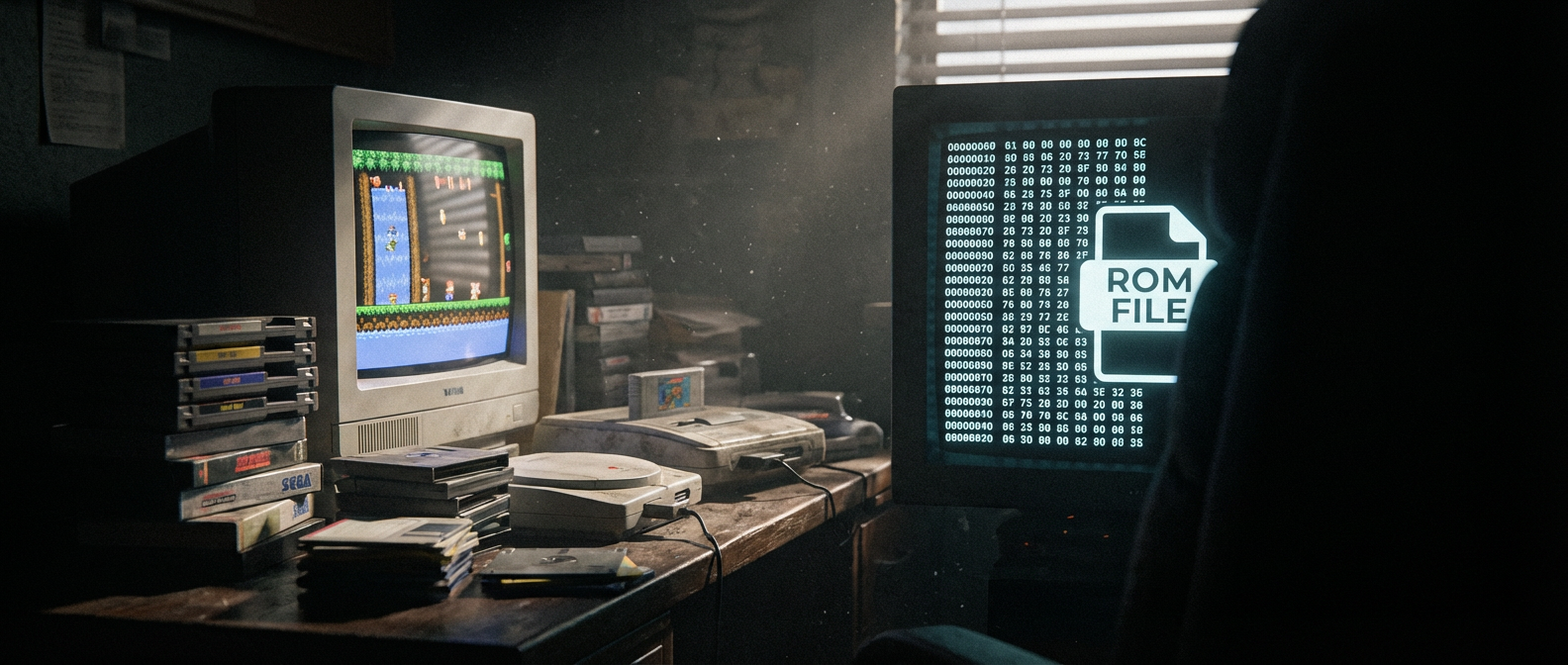
Imagine walking into the Louvre only to discover that 87 percent of its masterpieces had been removed, locked away in private vaults, or simply lost to time. This is exactly what’s happening to video game preservation right now. Nearly nine out of ten classic games have disappeared from legal availability. The Video Game History Foundation recently put hard numbers to this cultural disaster, and honestly? The results are depressing as hell.
This goes way beyond nostalgia trips. Video games are one of the most important cultural and artistic movements of the past fifty years, yet preservation gets maybe a tenth of the attention that film or literature receives. Books can be reprinted. Films can be remastered. But games? They’re these complex beasts of hardware, software, and context that make preservation incredibly tricky.
Here’s the kicker: this crisis isn’t happening because preservation is technically impossible. It’s happening because of legal paralysis. While museums worldwide display priceless artifacts behind glass, our digital heritage crumbles behind copyright walls that often protect nothing but corporate pride. We’re creating a weird form of cultural amnesia where entire genres and artistic movements just vanish.
Digital Archaeology in Action
The Internet Archive has become an unlikely hero here, hosting thousands of playable vintage titles under specific Digital Millennium Copyright Act exemptions. The Internet Archive games collection isn’t just file hosting. It’s a living museum where you can actually experience interactive history.
These preservation efforts show just how much design evolution is hidden in gaming’s timeline. Early arcade games had this pure mechanical precision where every pixel and sound effect mattered. Home console titles from the ’80s showcase incredible creativity within brutal technical limits. The design innovations from that era? Modern developers still study and steal from them.
The preservation movement also digs up forgotten experimental periods. Those weird mid-’90s multimedia adventures, early online gaming experiments, strange genre mashups. All of this stuff adds crucial context for understanding how interactive entertainment actually evolved. Without access to these games, today’s designers are working blind, missing huge chunks of what their medium can do.
The Corporate Preservation Paradox
The gaming industry’s relationship with its own history is absolutely bizarre. Major publishers aggressively hunt down ROM distribution sites while completely failing to make their classic catalogs legally available. Nintendo is the worst offender here. They’ll nuke fan projects and ROM archives with ruthless efficiency while keeping most of their library locked in a vault.
This enforcement-without-preservation strategy tells you everything about how publishers really view their back catalogs. They’re legal assets, not cultural artifacts worth protecting. The irony? Many current industry leaders built their careers studying the exact games they’re now keeping from the public.
Publishers stay weirdly quiet when you ask about preservation directly, but their legal departments will chase down 30-year-old intellectual property with the intensity of bloodhounds. They’re treating gaming history like private property instead of the shared cultural foundation it actually is. This completely misses how collaborative and iterative game development really works.
Hardware Renaissance and Legal Evolution
The growing market for premium emulation hardware like Analogue’s FPGA consoles and open-source MiSTer devices proves there’s real consumer demand for preserved gaming experiences. These systems obsess over hardware authenticity, recreating original gaming environments with incredible accuracy. Their success proves preservation isn’t just academic curiosity. It’s a viable market.
Legal frameworks have started catching up. The Library of Congress expanded and renewed exemptions for game preservation in 2024, finally recognizing that traditional copyright models suck at cultural preservation. These exemptions give crucial legal cover to institutions trying to maintain gaming history, though they’re still pretty limited.
The hardware preservation movement also highlights something important about early game development. Original hardware imposed specific constraints that shaped entire genres. Racing games designed for CRT displays used scan-line effects and color bleeding as deliberate design elements. Strip away that context and you’re fundamentally changing the artistic experience. It’s like looking at Renaissance frescoes under harsh fluorescent lighting.
Designing Tomorrow’s Digital Heritage
The ROM debate isn’t really about legal technicalities or nostalgic feelings. It’s about fundamental questions: Who owns culture? How do we preserve art? What do creators inherit from previous generations? Video games are collaborative art forms that build on previous innovations, making access to gaming history essential for the medium to advance.
Contemporary indie developers constantly cite classic games as influences, but legal restrictions increasingly separate new creators from their medium’s foundational works. This artificial scarcity hurts the entire creative ecosystem. Natural artistic evolution depends on studying and building upon previous innovations.
The preservation challenge also shows video games’ unique position as both commercial products and cultural artifacts. Unlike traditional media, games are functional objects requiring ongoing maintenance and technical expertise to stay accessible. This reality demands new preservation models that balance legitimate commercial interests with cultural stewardship.
Gaming preservation’s future depends on recognizing video games as legitimate cultural artifacts deserving protection comparable to other art forms. This requires industry acknowledgment that preservation helps innovation instead of threatening it. The ROM debate might seem technical, but it determines whether future generations inherit complete gaming heritage or just fragments of a lost digital civilization. What role will you play in preserving this irreplaceable cultural foundation?
The Digital Museum Crisis: Why ROM Preservation Matters More Than Copyright Wars
The Vanishing Vault of Gaming History
Imagine walking into the Louvre only to discover that 87 percent of its masterpieces had been removed, locked away in private vaults, or simply lost to time. This is exactly what’s happening to video game history right now. Nearly nine out of ten classic games have disappeared from legal availability. The Video Game History Foundation recently put numbers to this cultural disaster, and frankly, it’s worse than I expected. Decades of gaming history are hanging by the thinnest digital threads.
This goes way beyond nostalgia. Video games are one of the most important cultural and artistic movements of the past fifty years, yet their preservation gets a fraction of the attention given to film, literature, or visual arts. Unlike books that can be reprinted or films that can be remastered, video games exist as complex combinations of hardware, software, and context. That makes preservation uniquely challenging.
Here’s what really gets me: this crisis doesn’t come from technical impossibility. It comes from legal paralysis. While museums worldwide display priceless artifacts behind glass, our digital heritage crumbles behind copyright walls that often have no active commercial purpose. The result is a weird form of cultural amnesia where entire genres, development philosophies, and artistic movements risk permanent erasure.
Digital Archaeology in Action
Organizations like the Internet Archive have become unlikely heroes in this preservation battle, hosting thousands of playable vintage titles under specific Digital Millennium Copyright Act exemptions. The Internet Archive games collection is more than just file hosting. It’s a living museum where you can actually experience interactive history firsthand.
These preservation efforts reveal incredible design evolution hidden in gaming’s timeline. Early arcade games show pure mechanical precision, where every pixel and sound effect had essential gameplay functions. Home console titles from the 1980s display remarkable creativity within severe technical constraints. Those limitations led to design innovations that modern developers still study and copy.
The preservation movement also brings forgotten experimental periods back to light. Mid-1990s multimedia adventures, early online gaming experiments, weird genre-blending curiosities. They all add essential context for understanding how interactive entertainment evolved. Without access to these works, today’s designers lose crucial reference points for understanding what their medium can do.
The Corporate Preservation Paradox
The gaming industry’s relationship with its own history is deeply troubling. Major publishers aggressively pursue copyright enforcement against ROM distribution sites while simultaneously failing to make their classic catalogs legally accessible. Nintendo’s systematic DMCA campaigns against fan-made projects and ROM archives demonstrate this paradox most clearly. The company removes access to games it apparently has no intention of re-releasing.
This enforcement-without-preservation strategy suggests that many publishers view their back catalogs primarily as legal assets rather than cultural artifacts worth protecting. The irony hits hard when you consider that many current industry leaders built their careers studying and learning from the very games now locked away from public access.
Publishers often stay conspicuously silent on preservation questions while their legal departments pursue decades-old intellectual property with surprising energy. This approach treats gaming history as private property rather than shared cultural foundation. It completely misunderstands the medium’s collaborative and iterative nature.
Hardware Renaissance and Legal Evolution
The growing market for premium emulation hardware like Analogue’s FPGA consoles and open-source MiSTer devices shows real consumer demand for preserved gaming experiences. These systems approach preservation through hardware authenticity, recreating original gaming environments with obsessive accuracy. The success of such products proves that preservation is a viable market segment, not just academic curiosity.
Legal frameworks have started evolving to acknowledge preservation’s importance. The Library of Congress expanded and renewed exemptions for game preservation in 2024, recognizing that traditional copyright models poorly handle cultural preservation goals. These exemptions provide crucial legal cover for institutions trying to maintain gaming history, though they remain limited in scope and application.
The hardware preservation movement also highlights the artisanal aspects of early game development. Original hardware imposed specific aesthetic and functional constraints that shaped entire genres. Racing games designed for CRT displays used scan-line effects and color bleeding as deliberate design elements. Remove these contextual factors and you fundamentally alter the artistic experience. It’s like viewing Renaissance frescoes under fluorescent lighting.
Designing Tomorrow’s Digital Heritage
The ROM debate concerns more than legal technicalities or nostalgic indulgence. It addresses fundamental questions about cultural ownership, artistic preservation, and creative inheritance. Video games are collaborative art forms that build upon previous innovations, making access to gaming history essential for the medium’s advancement.
Contemporary indie developers frequently cite classic games as primary influences, yet legal restrictions increasingly separate new creators from their medium’s foundational works. This artificial scarcity impoverishes the entire creative ecosystem, preventing natural artistic evolution that depends on studying and building upon previous innovations.
The preservation challenge also reveals video games’ unique position as both commercial products and cultural artifacts. Unlike traditional media, games exist as functional objects requiring ongoing maintenance and technical expertise to remain accessible. This reality demands new preservation models that balance legitimate commercial interests with cultural stewardship responsibilities.
The future of gaming preservation depends on recognizing video games as legitimate cultural artifacts deserving protection comparable to other art forms. This recognition requires industry acknowledgment that preservation helps innovation rather than threatening it. The ROM debate may seem technical, but it ultimately determines whether future generations will inherit a complete gaming heritage or merely fragments of a lost digital civilization. What role will you play in preserving this irreplaceable cultural foundation?